
By Dr. Moxit Shah, DM Endocrinologist
Vishuddha Endocrine Clinic, Ahmedabad
GLP-1 medicines such as Semaglutide and Tirzepatide are increasingly prescribed to people over 60 with Type 2 Diabetes or Obesity.
Age alone is not a reason to avoid them.
But older adults need a more careful approach. Muscle loss, dehydration, poor appetite and multiple medicines can change the balance of benefits and risks. This guide explains what matters most for GLP-1 treatment in older adults.
Can older adults take GLP-1 medicines?
Yes, in appropriately selected patients. Clinical trials of GLP-1 medicines included many older adults, and some agents have shown cardiovascular benefits in people with established heart disease, many of whom were over 60.
Potential benefits include:
- Better blood glucose and HbA1c
- Low risk of Hypoglycemia when not combined with Insulin or Sulfonylureas
- Weight reduction, which may help knee pain, mobility and sleep apnea
- Cardiovascular benefits with certain agents in people with heart disease
What are the main concerns in older adults?
1. Muscle loss
Weight loss includes some lean mass. Older adults already lose muscle with age (Sarcopenia), and further loss can affect strength, balance and independence.
The goal is not to lose as many kilograms as possible, but to lose excess fat while preserving muscle. See GLP-1 and muscle loss.
2. Reduced appetite and nutrition
Some older adults already eat little. A medicine that reduces appetite further can lead to inadequate protein, vitamins and fluids.
3. Dehydration
Nausea, vomiting or diarrhea, together with a reduced sense of thirst, can cause dehydration and affect kidney function, especially in hot weather.
4. Multiple medicines
Many older adults take Insulin, Sulfonylureas, blood pressure tablets and diuretics. Doses may need adjusting as weight and glucose improve.
The ADA Standards of Care recommend reassessing Insulin and Sulfonylurea therapy when adding GLP-1 treatment, to reduce Hypoglycemia risk.
5. Existing conditions
Previous Pancreatitis, Gallbladder Disease, Gastroparesis, significant Diabetic Retinopathy and frailty all need careful individual consideration.
How should GLP-1 treatment be adapted for older adults?
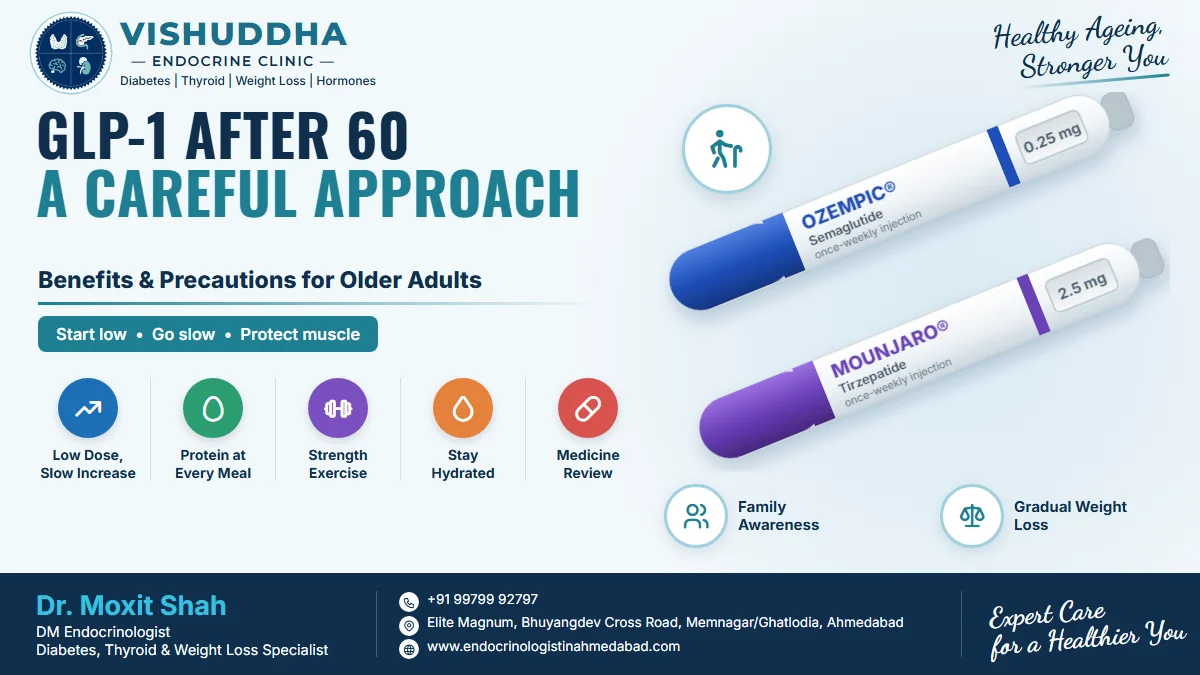
- Start low, go slow: gradual dose increases improve tolerance
- Do not aim for the maximum dose automatically: the lowest effective dose may be ideal
- Set realistic goals: health and function, not a number on the scale
- Protein at every meal: dal, paneer, curd, eggs, sprouts, fish or chicken as preferred
- Resistance exercise: simple strength work such as sit-to-stand, wall push-ups or light weights
- Fluids: regular sips through the day, especially in summer
- Medicine review: at each visit
For meal ideas, see our GLP-1 diet guide.
What should family members watch for?
- Eating very little, or skipping meals
- Persistent vomiting or diarrhea
- Dizziness, weakness or falls
- Confusion, which can be a sign of low sugar or dehydration
- Rapid or unintended weight loss
- Severe abdominal pain
Contact the treating doctor promptly if any of these occur.
Who may not be a good candidate?
GLP-1 treatment may not be suitable for older adults who are:
- Frail or underweight
- Already losing weight without trying
- Eating poorly
- Living with significant stomach-emptying problems
The decision should be made after a full assessment, not only on age or BMI.
GLP-1 treatment in Ahmedabad
At Vishuddha Endocrine Clinic, Dr. Moxit Shah assesses muscle, nutrition, kidney function and existing medicines before starting GLP-1 treatment in older adults, and adjusts the plan as treatment progresses. Read about how to use and store a GLP-1 pen.
Frequently Asked Questions About GLP-1 in Older Adults
Is there an upper age limit for Ozempic or Mounjaro?
There is no fixed upper age limit. Suitability depends on overall health, not age alone.
Will my father lose muscle on GLP-1?
Some lean mass loss is possible. Adequate protein and strength exercise help protect it.
Can GLP-1 medicines cause low sugar in the elderly?
Rarely on their own. The risk rises with Insulin or Sulfonylureas, whose doses may need reducing.
How fast should an older person lose weight?
Gradually. Very rapid weight loss is not desirable in older adults.
Can GLP-1 medicines help with knee pain?
Weight loss can reduce load on the knees and may improve pain and mobility in people with Obesity.
Final Takeaway
GLP-1 medicines can benefit many older adults, when used thoughtfully.
Careful selection + low starting dose + slow escalation + protein + strength exercise + hydration + medicine review + family awareness.
If you are considering GLP-1 treatment for yourself or a parent in Ahmedabad, consult an endocrinologist first.
Dr. Moxit Shah
DM Endocrinologist
Vishuddha Endocrine Clinic, Ahmedabad
📞 +91 99799 92797
📍 Elite Magnum, Bhuyangdev Cross Road, Ahmedabad
🌐 endocrinologistinahmedabad.com
This article is for educational purposes only and does not replace an individual medical consultation. Prescription medicines should be started, adjusted or stopped only under the supervision of a qualified healthcare professional.