
By Dr. Moxit Shah, DM Endocrinologist
Vishuddha Endocrine Clinic, Ahmedabad
Metformin has been used for Type 2 Diabetes for decades. It is affordable, effective and one of the most widely prescribed medicines in India.
Yet it is also one of the most misunderstood.
Patients often ask whether Metformin damages the kidneys, why it upsets the stomach, and whether it causes Vitamin B12 Deficiency. This guide answers those questions clearly.
How does Metformin work?
Metformin lowers blood glucose mainly by:
- Reducing the amount of glucose the liver releases
- Improving the body’s response to Insulin
- Slightly reducing glucose absorption from the gut
It does not force the pancreas to release extra Insulin. That is why Metformin on its own rarely causes Hypoglycemia.
What are the benefits of Metformin?
- Lowers HbA1c and fasting sugar
- Weight-neutral, and sometimes helps modest weight loss
- Low risk of Hypoglycemia on its own
- Long safety record and low cost
- Combines well with most other diabetes medicines, including GLP-1 medicines and Insulin
Metformin is also sometimes used in Prediabetes and PCOS, when a doctor decides it is appropriate.
What are the common side effects of Metformin?
The most common are gastrointestinal:
- Loose stools or diarrhea
- Nausea
- Bloating
- Abdominal discomfort
- Metallic taste
These are usually worst in the first few weeks and often settle.
What helps:
- Taking it with or just after meals
- Starting at a low dose and increasing gradually
- Extended-release (SR or XR) tablets, which are often better tolerated
Many patients tell us:
“Metformin didn’t suit me.”
Often, a slower start or a switch to the extended-release form solves the problem. Discuss it before stopping.
Does Metformin cause Vitamin B12 Deficiency?
Yes, long-term use can lower Vitamin B12 levels in some people.
This matters because B12 Deficiency can cause:
- Tingling or numbness in the feet
- Fatigue
- Anaemia
- Memory or concentration problems
These symptoms can be mistaken for Diabetic Neuropathy. The ADA Standards of Care recommend periodic Vitamin B12 checks in people on long-term Metformin, especially if they have Neuropathy or Anaemia.
Vegetarian diets, common in Gujarat, are often already low in B12, so testing is particularly relevant here. If levels are low, supplements work well, and Metformin can usually continue.
Does Metformin damage the kidneys?
No.
This is one of the most common myths. Metformin does not damage healthy kidneys. However, it is cleared by the kidneys, so the dose is adjusted when kidney function falls, and it is not used when kidney function is severely reduced.
Uncontrolled Diabetes is what harms the kidneys. Read more in are diabetes medicines harmful to the kidneys? and Diabetes and kidney health.
What is lactic acidosis, and should I worry?
Lactic acidosis is a rare but serious complication. The risk is mainly in people with severe kidney impairment, severe liver disease, heavy alcohol use, or serious acute illness with dehydration or low oxygen.
For most people with normal kidney function, the risk is very low.
When should Metformin be paused?
Your doctor may advise a temporary pause:
- During severe vomiting, diarrhea or dehydration
- Before some CT scans with iodinated contrast, depending on kidney function
- Before major surgery
- During serious illness or hospital admission
Ask your doctor for a clear “sick-day plan” in advance.
Who should not take Metformin?
- People with severely reduced kidney function
- People with severe liver disease
- People who drink heavily
- Some people with severe heart or lung failure
The decision is individual, and your doctor will check kidney function before and during treatment.
Can Metformin be combined with other medicines?
Yes. Metformin is often combined with other medicines, each addressing a different part of Diabetes:
Metformin → liver glucose production and Insulin sensitivity
GLP-1 medicines → appetite, weight and glucose regulation
SGLT2 inhibitors → glucose loss through the urine, with heart and kidney benefits in suitable patients
See our complete guide to Diabetes medicines.
Diabetes treatment in Ahmedabad
At Vishuddha Endocrine Clinic, Dr. Moxit Shah reviews each patient’s medicines, kidney function, B12 status and treatment goals, rather than using one plan for everyone.
Frequently Asked Questions About Metformin
Should I take Metformin before or after food?
With or just after meals, to reduce stomach side effects.
Does Metformin cause weight gain?
No. It is weight-neutral and may help modest weight loss.
Can Metformin cause low sugar?
Rarely on its own. The risk rises when combined with Insulin or Sulfonylureas. Read about Hypoglycemia and the 15-15 rule.
How often should Vitamin B12 be checked?
Periodically during long-term use, and sooner if you develop tingling, numbness or Anaemia. Your doctor will advise the interval.
Is Metformin safe for life?
For most people, yes, with regular kidney function and B12 monitoring.
Final Takeaway
Metformin remains one of the most useful medicines in Type 2 Diabetes when it is taken correctly and monitored.
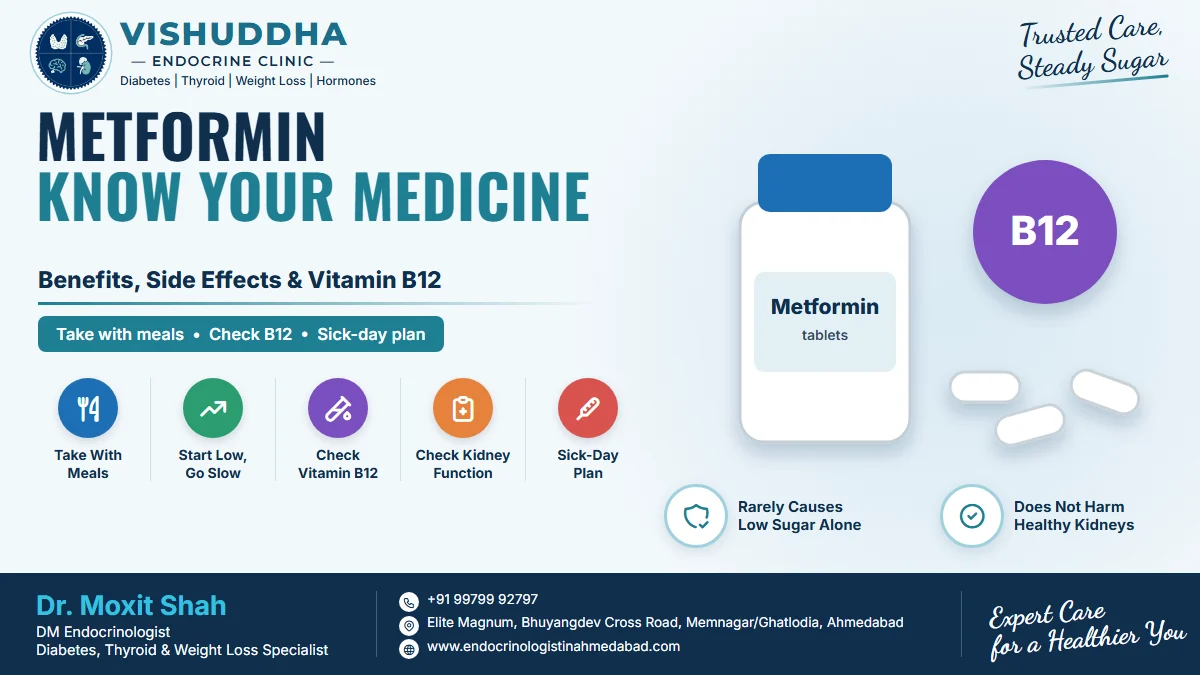
Take with meals + start low and go slow + consider extended-release + check kidney function + check Vitamin B12 + a sick-day plan.
If Metformin has not suited you, consult an endocrinologist before stopping it on your own.
Dr. Moxit Shah
DM Endocrinologist
Vishuddha Endocrine Clinic, Ahmedabad
📞 +91 99799 92797
📍 Elite Magnum, Bhuyangdev Cross Road, Ahmedabad
🌐 endocrinologistinahmedabad.com
This article is for educational purposes only and does not replace an individual medical consultation. Prescription medicines should be started, adjusted or stopped only under the supervision of a qualified healthcare professional.