
By Dr. Moxit Shah, DM Endocrinologist
Vishuddha Endocrine Clinic, Ahmedabad
Most people with Diabetes worry about high blood sugar. But low blood sugar, called Hypoglycemia, can be more dangerous in the short term.
It can come on within minutes.
Knowing the early signs, and exactly what to do, can prevent a fall, an accident or a hospital visit. This guide explains the symptoms of Hypoglycemia, its common causes, the 15-15 rule for treatment, and how to prevent it.
What is Hypoglycemia?
Hypoglycemia means blood glucose has fallen below a safe level. The American Diabetes Association (ADA) Standards of Care describe three levels:
| Level | Blood glucose | What it means |
|---|---|---|
| Level 1 | Below 70 mg/dL | Alert value: treat now |
| Level 2 | Below 54 mg/dL | Clinically significant low |
| Level 3 | Any value | Severe: the person needs help from someone else |
For normal targets, see our guide to normal blood sugar levels.
What are the symptoms of low blood sugar?
Early symptoms:
- Shakiness
- Sweating
- Fast heartbeat
- Sudden hunger
- Anxiety or irritability
- Tingling around the lips
Later symptoms:
- Confusion
- Difficulty concentrating
- Blurred vision
- Slurred speech
- Unusual behaviour
- Seizures or loss of consciousness
At night, you may notice:
- Nightmares
- Night sweats with damp sheets
- Morning headache
- Feeling unusually tired on waking
Many patients describe it simply:
“I suddenly felt weak, sweaty and hungry.”
What causes Hypoglycemia in Diabetes?
The two main medicine groups that cause it are:
- Insulin
- Sulfonylureas, such as Glimepiride, Gliclazide and Glibenclamide
Common triggers include:
- Skipping or delaying a meal
- Eating less than usual, including during fasts
- More physical activity than usual
- Drinking alcohol, especially on an empty stomach
- Taking an extra or wrong dose
- Kidney or liver disease
- Weight loss or new medicines that lower sugar further
Metformin, DPP-4 inhibitors, SGLT2 inhibitors and GLP-1 medicines rarely cause Hypoglycemia on their own. The risk rises when they are combined with Insulin or a Sulfonylurea.
How do I treat low blood sugar? The 15-15 rule
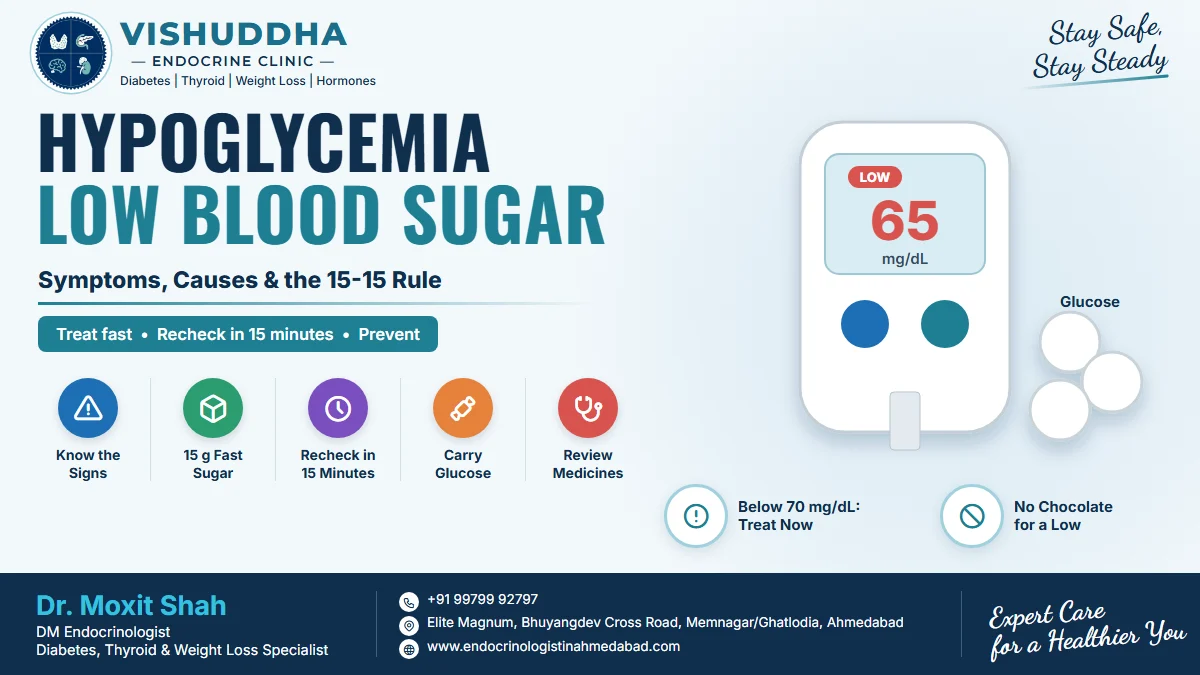
If your sugar is below 70 mg/dL, or you have symptoms and cannot check:
- Take 15 grams of fast-acting sugar.
- Wait 15 minutes, then recheck.
- If still below 70 mg/dL, repeat.
- Once normal, eat a snack or your next meal if it is more than an hour away.
15 grams of fast sugar is about:
- 3 to 4 glucose tablets
- 3 teaspoons of sugar or glucose powder dissolved in water
- Half a glass (about 150 ml) of fruit juice
- Half a glass of a regular soft drink, not diet
Avoid treating a low with:
- Chocolate
- Laddoo, barfi or other mithai
- Biscuits with a lot of fat
The fat in these slows the rise in sugar. Treat first with plain sugar, then eat.
What if the person is unconscious?
This is an emergency.
- Do not give food or drink by mouth, as it can choke them
- Turn them on their side
- Call an ambulance immediately
- If Glucagon has been prescribed and you have been trained, give it
Family members of people on Insulin should know these steps.
What is Hypoglycemia unawareness?
Some people, especially those with long-standing Diabetes or frequent lows, stop feeling the early warning signs. The first sign may be confusion.
This is dangerous. If you have had a low without warning, tell your doctor. Treatment targets may be relaxed and a continuous glucose monitor (CGM) with low alerts can help.
Can I drive if I have Diabetes?
Yes, with precautions, if you take Insulin or a Sulfonylurea:
- Check your sugar before driving
- Do not drive if it is low; treat it, recheck and wait until you feel fully normal
- Keep glucose in the car
- Stop and treat if you feel symptoms while driving
How can Hypoglycemia be prevented?
- Eat meals at regular times
- Match your medicine to your meals, as your doctor advises
- Check sugar before and after exercise
- Carry glucose tablets or sugar sachets
- Limit alcohol and never drink on an empty stomach
- Plan ahead with your doctor before fasts and festivals
- Review your doses if you lose weight or your kidney function changes
Planning to fast? Read our guide on Diabetes and Navratri fasting.
Never reduce or stop Insulin on your own. If you are having frequent lows, the dose or medicine may need to change, and that decision belongs with your doctor.
When should you see a doctor?
- Any severe low needing someone else’s help
- More than one or two lows a week
- Lows at night
- Lows without warning signs
- Lows after a change in medicine or weight
Diabetes care in Ahmedabad
Frequent Hypoglycemia is a signal that treatment needs adjusting, not something to live with.
At Vishuddha Endocrine Clinic, Dr. Moxit Shah reviews glucose patterns, CGM reports and medicines to reduce lows while keeping blood sugar controlled. Learn more about the different types of Insulin.
Frequently Asked Questions About Hypoglycemia
What blood sugar level is too low?
Below 70 mg/dL should be treated. Below 54 mg/dL is considered significant.
Can people without Diabetes get Hypoglycemia?
It is uncommon. Repeated lows without Diabetes need medical evaluation to find the cause.
Is chocolate good for low sugar?
No. Its fat slows sugar absorption. Use glucose, sugar in water or juice first.
Does Metformin cause low sugar?
Rarely on its own. The risk is mainly with Insulin and Sulfonylureas.
Can low sugar happen during sleep?
Yes. Night sweats, nightmares and morning headaches can be signs. Tell your doctor if you notice them.
Final Takeaway
Hypoglycemia is common, treatable and largely preventable.
Know the signs + treat with 15 grams of fast sugar + recheck in 15 minutes + carry glucose + regular meals + a medicine review with your doctor.
If you are having frequent lows, consult an endocrinologist before changing your treatment on your own.
Dr. Moxit Shah
DM Endocrinologist
Vishuddha Endocrine Clinic, Ahmedabad
📞 +91 99799 92797
📍 Elite Magnum, Bhuyangdev Cross Road, Ahmedabad
🌐 endocrinologistinahmedabad.com
This article is for educational purposes only and does not replace an individual medical consultation. Prescription medicines should be started, adjusted or stopped only under the supervision of a qualified healthcare professional.