
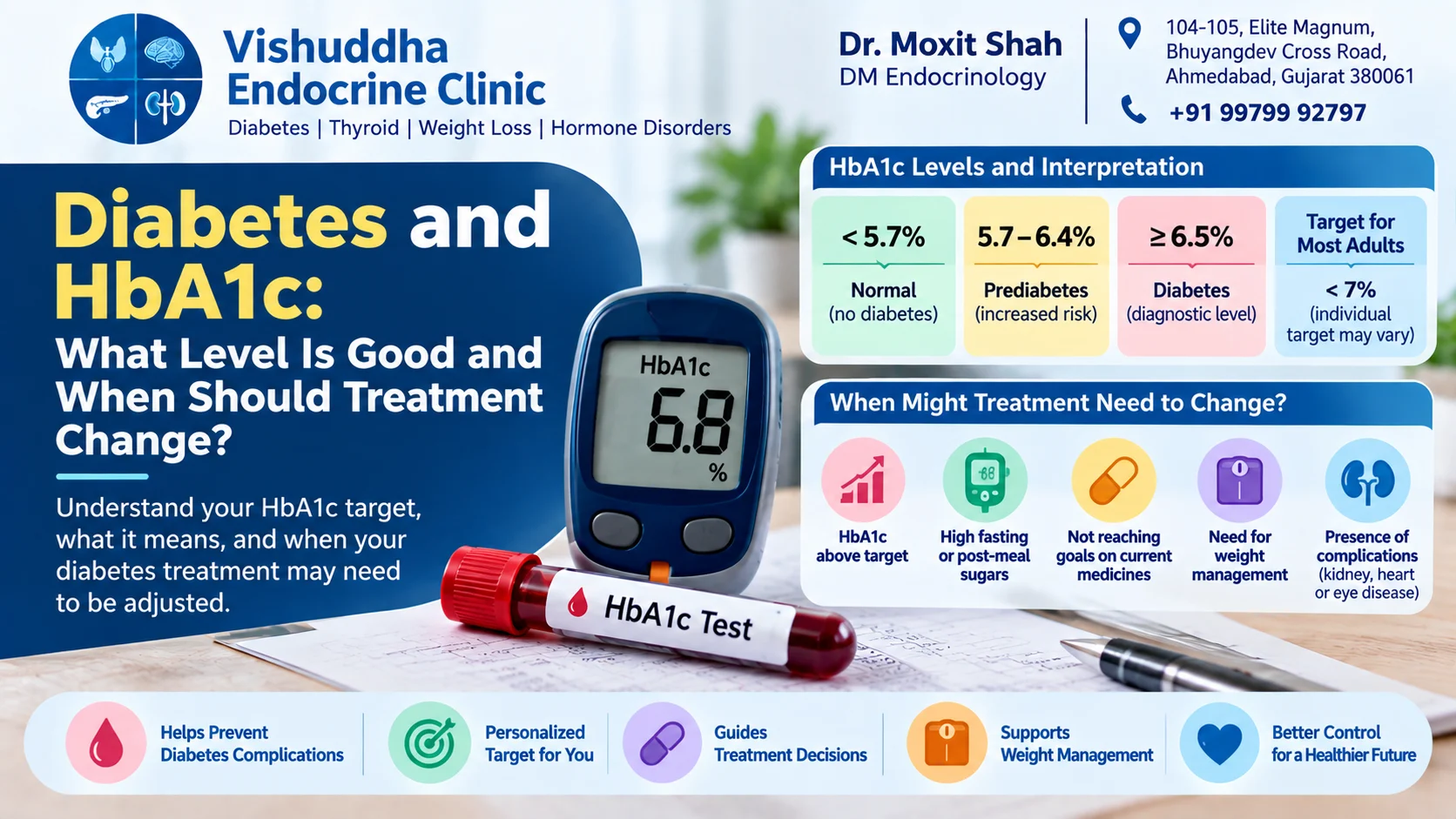
HbA1c is one of the most useful tests for understanding average blood glucose over the preceding 2–3 months. But an HbA1c result should not be interpreted in isolation. The right target depends on age, duration of diabetes, other health conditions, hypoglycemia risk, treatment burden and individual goals.
What Is HbA1c?
HbA1c, also called A1c, reflects the percentage of hemoglobin that has glucose attached to it. Because red blood cells circulate for several months, HbA1c provides a longer-term picture of glucose exposure than a single fasting or post-meal glucose reading.
What HbA1c Level Means Diabetes or Prediabetes?
For diagnosis, commonly used thresholds are:
- Below 5.7%: normal range
- 5.7% to 6.4%: prediabetes range
- 6.5% or higher: diabetes range when diagnostic criteria are appropriately confirmed
These diagnostic thresholds are different from the HbA1c target used after diabetes has been diagnosed. A person with established diabetes does not necessarily need to aim for an HbA1c below the diagnostic threshold.
What Is a Good HbA1c Target in Diabetes?
For many nonpregnant adults with diabetes, the 2026 American Diabetes Association Standards of Care recommend an HbA1c goal of less than 7%. However, the target should be individualized. A lower target may be appropriate for some people who can achieve it safely, while a less stringent target may be appropriate when hypoglycemia, frailty, significant comorbidities, cognitive or functional limitations, or treatment burden make intensive treatment less suitable.
The important question is therefore not simply “Is my HbA1c below 7%?” but “Is this HbA1c appropriate and safe for me?”
When Should Diabetes Treatment Be Changed?
Treatment may need reassessment when HbA1c remains above the person’s individualized goal despite appropriate lifestyle measures and adherence to the current treatment plan. It may also need review when glucose levels are improving but hypoglycemia or treatment burden becomes a concern.
Important situations include:
- HbA1c consistently above the agreed target
- Persistently high fasting or post-meal glucose
- Frequent or severe hypoglycemia
- New kidney, eye, nerve or cardiovascular complications
- Weight gain or difficulty achieving weight-management goals
- Medication side effects or poor tolerability
- Changes in kidney or liver function that affect treatment choices
- Changes in lifestyle, pregnancy plans or other major health circumstances
Why One HbA1c Result May Not Be Enough
HbA1c is an average measure. Two people can have the same HbA1c while having very different glucose patterns. For example, one person may have relatively stable glucose, while another may have large swings with both high and low readings.
For this reason, HbA1c is often considered together with fasting glucose, post-meal glucose, self-monitoring or continuous glucose monitoring when appropriate.
How Often Should HbA1c Be Checked?
People whose diabetes is stable and who are meeting their treatment goals may not need HbA1c testing as frequently as someone whose treatment has recently changed or whose glucose is above target. The clinical situation and treatment plan should determine the testing interval.
When treatment has changed or the person is not meeting the individualized glycemic goal, HbA1c is commonly reassessed at approximately three-month intervals. When control is stable and goals are being met, testing at least twice a year is generally appropriate.
What If HbA1c Is 7%, 8%, 9% or Higher?
An HbA1c of 7%, 8% or 9% should not automatically trigger a particular medication. The next step depends on the person’s current medicines, glucose pattern, adherence, diet and activity, weight, hypoglycemia risk, kidney and cardiovascular status, treatment goals and preferences.
For some people, treatment intensification may be appropriate. For others, the first step may be identifying an underlying problem such as missed doses, an unsuitable regimen, steroid exposure, an infection or another condition affecting glucose control.
Can HbA1c Be Too Low?
Lower is not always better if reaching a very low HbA1c requires treatment that causes recurrent hypoglycemia or creates an excessive treatment burden. The ADA recommends individualized goals and consideration of deintensifying medicines that cause hypoglycemia when the risks or burdens outweigh the benefits.
HbA1c and Weight Management
For people with type 2 diabetes who also have excess weight, treatment planning may consider both glucose control and weight-management goals. Some modern diabetes medicines can address both, but the choice should be based on the individual’s medical profile rather than HbA1c alone.
When Should You Consult an Endocrinologist?
An endocrinology consultation can be particularly useful when HbA1c remains above target despite treatment, when multiple medicines or insulin are being considered, when hypoglycemia is occurring, when diabetes is complicated by kidney, eye, nerve or cardiovascular disease, or when treatment needs to be individualized around weight and other metabolic conditions.
Diabetes and HbA1c Care at Vishuddha Endocrine Clinic
At Vishuddha Endocrine Clinic in Ahmedabad, Dr. Moxit Shah, DM Endocrinology, evaluates HbA1c together with glucose patterns, medications, weight, complications and other health factors to develop an individualized diabetes treatment plan.
Related Resources
- Diabetes Management: A Practical Guide for Better Blood Sugar Control
- Why You Need to Consult an Endocrinologist for Diabetes
- GLP-1 Injection Specialist in Ahmedabad
- How to Start GLP-1 Injections
References
- American Diabetes Association. Standards of Care in Diabetes—2026: Glycemic Goals, Hypoglycemia, and Hyperglycemic Crises.
- American Diabetes Association. Standards of Care in Diabetes—2026: Diagnosis and Classification of Diabetes.
Important: This article is for education and does not replace an individualized medical consultation. HbA1c targets and diabetes medicines should be decided with your treating clinician.