
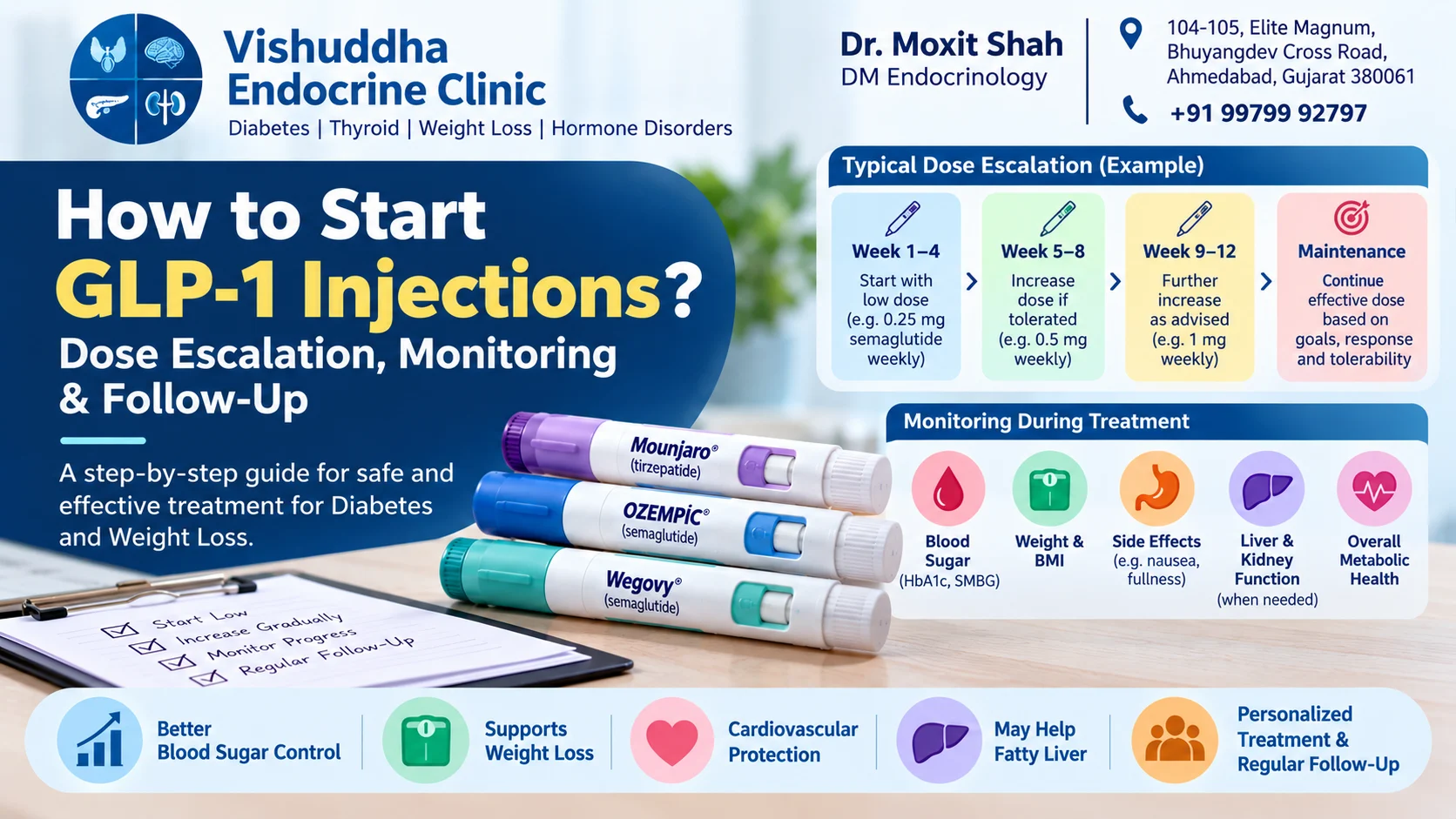
Starting a GLP-1 medicine should be individualized. GLP-1 receptor agonists and related incretin-based medicines can help selected people with type 2 diabetes and/or Weight Loss goals, but the medicine, starting dose, escalation schedule and monitoring plan depend on the specific product and the patient’s medical situation.
What Are GLP-1 Injections?
GLP-1 receptor agonists are medicines that act on pathways involved in glucose regulation, appetite and satiety. Examples include semaglutide. Tirzepatide is a related dual GIP/GLP-1 receptor agonist. These medicines are prescribed for specific indications and should not be started, switched or escalated without appropriate medical guidance.
Step 1: Confirm That GLP-1 Therapy Is Appropriate
Before treatment, an endocrinologist reviews the reason for treatment, diabetes status, HbA1c and glucose pattern when relevant, body weight and related health conditions, current medicines, kidney and liver considerations, gastrointestinal history, pregnancy plans and important contraindications or precautions.
The goal is not simply to reach a higher dose. The goal is to find a dose that provides the intended benefit while remaining tolerable and appropriate for the individual.
Step 2: Start With the Product-Specific Starting Dose
Many injectable GLP-1-based medicines are deliberately started at a low dose. This can help improve tolerability, particularly gastrointestinal tolerability. The exact starting dose is medicine-specific.
For example, the current U.S. prescribing information for Ozempic (semaglutide) starts at 0.25 mg once weekly for four weeks before increasing to 0.5 mg once weekly. Further increases to 1 mg and 2 mg are considered only when additional glycemic control is needed and after the specified time at the preceding dose.
Wegovy injection also starts at 0.25 mg once weekly for four weeks, followed by product-specific escalation at four-week intervals toward an appropriate maintenance dose. If a dose is not tolerated, the prescribing information allows consideration of delaying escalation.
These examples should not be copied to another GLP-1 medicine. Tirzepatide and other products have their own dosing schedules.
Step 3: Escalate Gradually — Do Not Rush
Dose escalation is usually based on the individual medicine’s prescribing information, treatment response and tolerability. If significant nausea, vomiting, abdominal symptoms or other adverse effects occur, the next dose increase may need to be delayed or the treatment plan reassessed.
A common mistake is assuming that the highest available dose is automatically the best dose. It is not. The appropriate maintenance dose is the dose that fits the indication, treatment response, safety profile and individual goals.
Step 4: Monitor During Treatment
Blood glucose
People with diabetes may need glucose monitoring, particularly when GLP-1 therapy is combined with insulin or medicines that can cause hypoglycemia. Diabetes medicines may need adjustment as glucose improves.
Weight and appetite
Weight, appetite, dietary intake and treatment goals should be reviewed over time. Weight response can vary between individuals.
Gastrointestinal symptoms
Nausea, vomiting, diarrhea, constipation and abdominal discomfort are among the gastrointestinal effects that can occur. Smaller meals, avoiding very heavy or fatty meals and gradual dose escalation may improve tolerability for some people.
Other health factors
Follow-up may include review of blood pressure, metabolic health and kidney or liver parameters when clinically indicated. Symptoms suggesting a significant adverse event require prompt medical assessment.
Step 5: Review Other Diabetes Medicines
When GLP-1-based therapy is added to an existing diabetes regimen, the entire medication list should be reviewed. In particular, insulin and sulfonylureas can contribute to hypoglycemia, so treatment may need adjustment as glucose levels improve.
How Often Should Follow-Up Occur?
Follow-up depends on the medicine, starting dose, diabetes control, side effects and clinical situation. Early follow-up is useful after starting or changing therapy so that tolerability, glucose readings, weight response and other medicines can be reviewed before further escalation.
When Should You Contact Your Doctor?
- Persistent or severe vomiting or diarrhea
- Severe or persistent abdominal pain
- Symptoms of hypoglycemia
- Difficulty maintaining hydration
- A significant change in glucose levels
- Unexpected or concerning symptoms after an injection
GLP-1 Treatment at Vishuddha Endocrine Clinic, Ahmedabad
At Vishuddha Endocrine Clinic, Dr. Moxit Shah, DM Endocrinology, evaluates whether GLP-1-based treatment is appropriate and develops an individualized plan for starting, dose escalation, monitoring and follow-up.
The approach may include review of diabetes and metabolic health, weight-management goals, current medicines, treatment response and side effects. Treatment decisions are individualized rather than based on a single fixed dose or schedule.
Related Resources
- GLP-1 Injection Specialist in Ahmedabad
- Semaglutide for Weight Loss in India
- Diabetes and Weight Loss
- Why Consult an Endocrinologist for Diabetes?
References
- FDA: Ozempic Prescribing Information
- FDA: Wegovy Prescribing Information
- ADA Standards of Care 2026: Pharmacologic Approaches to Glycemic Treatment
Important: This article is for education and does not replace an individualized medical consultation. GLP-1 medicines should be prescribed and adjusted according to the specific product’s prescribing information and the patient’s clinical needs.