
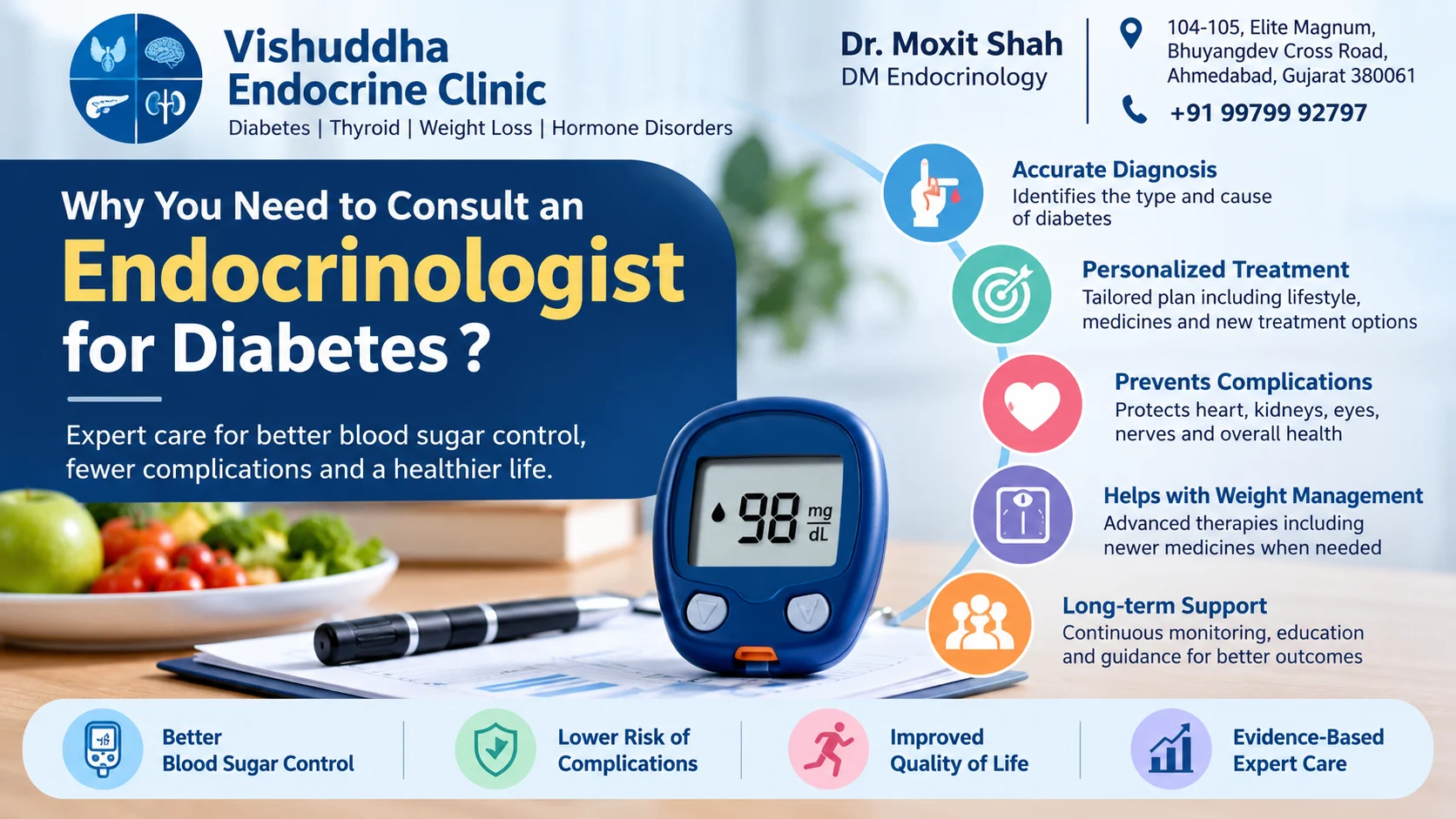
Diabetes is a long-term condition that affects blood sugar regulation and can involve many parts of the body. Many people with diabetes can receive excellent ongoing care from a primary care doctor, while others benefit from an endocrinologist when diabetes is difficult to control, treatment becomes more complex, or complications and other hormone-related conditions are present.
An endocrinologist is a doctor who specializes in hormones and metabolic disorders, including diabetes. The American Diabetes Association (ADA) Standards of Care 2026 emphasizes team-based diabetes care and appropriate specialist referral for people with diabetes-related complications, comorbidities, or more complex treatment needs.
1. Diabetes treatment needs to be individualized
There is no single diabetes treatment plan that works for everyone. Treatment may involve lifestyle changes, oral medicines, injectable therapies, insulin, glucose monitoring, and management of blood pressure and cholesterol. An endocrinologist can review your diabetes type, HbA1c, glucose pattern, medications, weight, kidney function, cardiovascular risk, and other health factors to build an individualized plan.
For people using insulin or other medicines that can cause hypoglycemia, careful adjustment is particularly important. The ADA recommends assessing glycemic status using measures such as HbA1c and, when appropriate, blood glucose monitoring or continuous glucose monitoring (CGM).
2. When blood sugar remains high despite treatment
If your HbA1c or home glucose readings remain above your individualized target despite taking medicines regularly, it may be time for a specialist review. An endocrinologist can look for reasons for poor control, such as medication adherence, diet, inadequate treatment intensity, incorrect insulin timing or technique, changing insulin requirements, other illnesses, or an incorrect classification of diabetes.
The goal is not simply to add more medicines. The treatment plan should be adjusted thoughtfully while balancing glucose control with the risks of hypoglycemia, side effects, cost, convenience, and your personal preferences.
3. If you are having frequent low blood sugar episodes
Low blood sugar can be dangerous, especially when it is recurrent or occurs without warning symptoms. People taking insulin or certain glucose-lowering medicines may need individualized dose adjustments and education about preventing and treating hypoglycemia.
CGM can also be useful for selected people because it provides information about glucose patterns and can help guide safer treatment decisions. Your doctor can determine whether CGM or another monitoring approach is appropriate for you.
4. When insulin treatment becomes complicated
Insulin therapy can become more complex when a person needs multiple daily injections, has large glucose fluctuations, experiences frequent hypoglycemia, or is considering insulin delivery technology. The ADA identifies clinicians and healthcare team members experienced in advanced diabetes management as important for people receiving intensive insulin therapy.
An endocrinologist can help with insulin selection, dose adjustment, timing, correction strategies, hypoglycemia prevention, and interpretation of glucose patterns.
5. To choose newer diabetes medicines appropriately
Diabetes treatment has expanded beyond traditional tablets and insulin. Depending on the individual’s medical profile, medicines from classes such as GLP-1 receptor agonists and SGLT2 inhibitors may have roles in diabetes management and may provide benefits beyond lowering glucose.
However, these medicines are not appropriate for everyone. Kidney function, cardiovascular disease, heart failure, weight goals, gastrointestinal symptoms, other medications, contraindications, and individual preferences can affect treatment selection. A specialist can help determine whether a newer therapy fits the overall treatment plan.
6. To reduce the risk of diabetes complications
Diabetes can affect the eyes, kidneys, nerves, heart and blood vessels. Good diabetes care therefore involves more than checking blood sugar. The ADA recommends comprehensive assessment of glycemic status, diabetes complications, cardiovascular risk, comorbid conditions, and other factors that influence long-term care.
Depending on your situation, your diabetes team may coordinate eye examinations, kidney assessment, cardiovascular risk management, foot care, nutrition support, and other specialist referrals.
7. If you have diabetes and other endocrine or metabolic problems
Some people with diabetes also have thyroid disorders, adrenal disorders, pituitary conditions, hypogonadism, or significant weight-management concerns. Because endocrinologists are trained across the endocrine system, they can assess whether another hormonal or metabolic condition is contributing to symptoms or making diabetes management more difficult.
8. During major life changes or special situations
Diabetes treatment may need closer supervision during pregnancy planning, pregnancy, major illness, surgery, hospitalization, or significant changes in weight or lifestyle. Medication choices and glucose targets may need to be reconsidered during these periods.
When should you consider seeing an endocrinologist for diabetes?
- HbA1c or glucose levels remain high despite treatment.
- You are having repeated or severe hypoglycemia.
- You are starting or intensifying insulin therapy.
- Your glucose readings fluctuate widely or are difficult to interpret.
- You need help selecting or adjusting newer diabetes medicines.
- You have diabetes-related kidney, eye, nerve, cardiovascular, or foot problems.
- You have diabetes along with another endocrine or hormonal disorder.
- You are planning pregnancy or have diabetes during pregnancy and need specialist management.
- Your diabetes treatment has become complicated or difficult to manage.
Does everyone with diabetes need an endocrinologist?
Not necessarily. Many people with stable type 2 diabetes can be managed effectively by a primary care physician or other appropriately trained healthcare professional. The important point is to have a coordinated diabetes care team and to involve a specialist when the clinical situation calls for it. NIDDK also describes diabetes care as team-based, with primary care professionals working with diabetes educators, dietitians, eye specialists, pharmacists and other specialists when needed.
What should you take to your diabetes consultation?
- Your latest HbA1c and other relevant blood test reports.
- A list of all medicines, including doses and timing.
- Home glucose readings or CGM reports, if available.
- Your blood pressure and weight records, if available.
- Details of episodes of low or very high blood sugar.
- Previous diabetes prescriptions and treatment history.
- Reports related to kidney, eye, heart or nerve problems.
Diabetes care at Vishuddha Endocrine Clinic, Ahmedabad
At Vishuddha Endocrine Clinic, Dr. Moxit Shah, DM Endocrinology, provides evaluation and management of Diabetes, Thyroid, Weight Loss and other Hormone Disorders. Diabetes care is individualized according to glucose patterns, HbA1c, medications, lifestyle, complications, cardiovascular and kidney risk, and the patient’s treatment goals.
If you are looking for an Endocrinologist in Ahmedabad for diabetes management, a specialist consultation can help clarify your diagnosis and create a structured long-term treatment plan.
Vishuddha Endocrine Clinic
104-105, Elite Magnum, Bhuyangdev Cross Road, Opp. Utsav Elegance, Vardhmannagar Society, Ghatlodiya/Memnagar, Ahmedabad, Gujarat 380061
Phone: +91 99799 92797
Related Diabetes Resources
- Diabetes: Symptoms, Tests, Treatment & Blood Sugar Control
- Diabetes and Weight Loss: How Losing Weight Can Improve Blood Sugar
- SGLT2 Inhibitors: Benefits & Side Effects
- Diabetes and Smoking: Risks, Blood Sugar & Why Quitting Matters
References
- American Diabetes Association. Standards of Care in Diabetes—2026.
- ADA 2026: Comprehensive Medical Evaluation and Assessment of Comorbidities.
- NIDDK: Managing Diabetes and the Diabetes Care Team.
Medical information on this page is for education and does not replace an individual consultation with a qualified healthcare professional. Diabetes treatment should be personalized to the individual’s clinical condition.