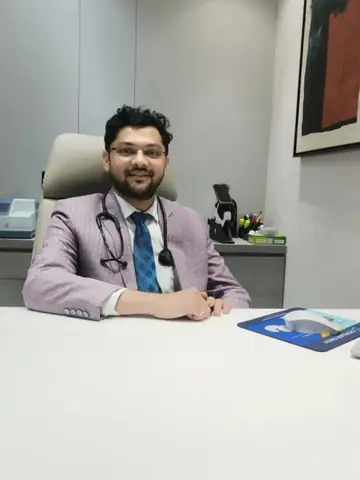
By Dr. Moxit Shah, DM Endocrinologist
Vishuddha Endocrine Clinic, Ahmedabad
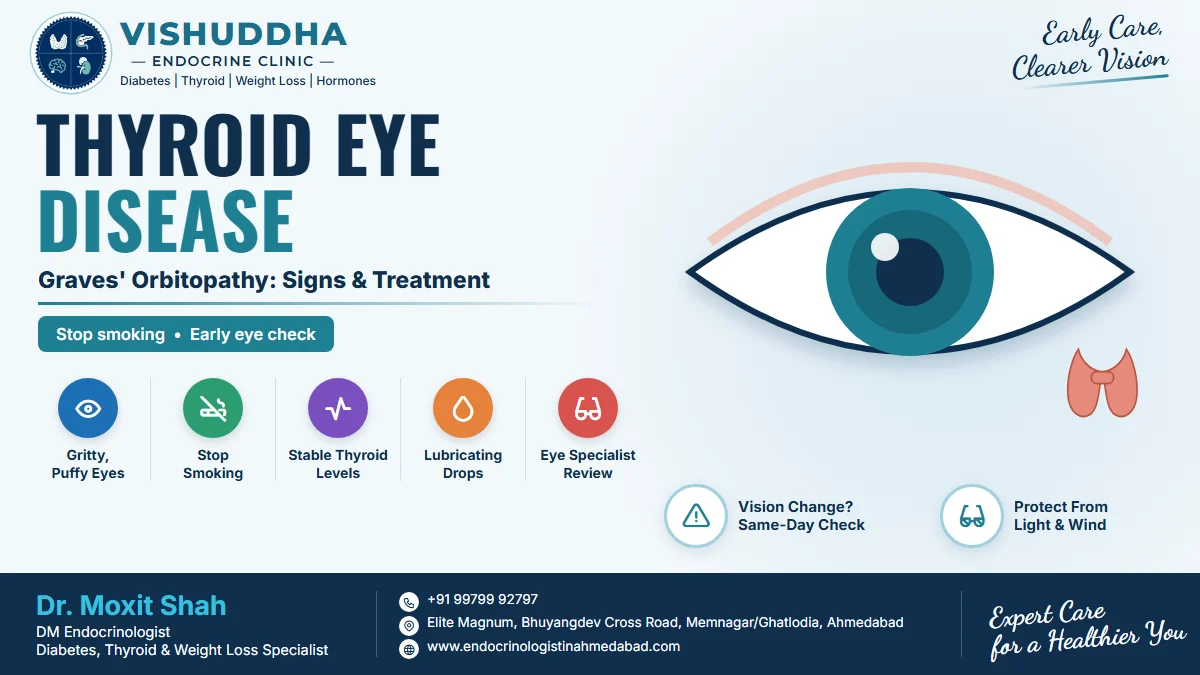
Gritty eyes. Puffy eyelids. Eyes that look more “staring” than before.
In people with an overactive thyroid, these can be signs of Thyroid Eye Disease, also called Graves’ Orbitopathy.
It is often mild. But in some people it can affect vision, so early recognition matters. This guide explains the signs, who is at risk and how it is treated.
What is Thyroid Eye Disease?
Thyroid Eye Disease is an autoimmune condition. The same immune process that affects the thyroid in Graves’ Disease also causes inflammation and swelling of the muscles and fat behind the eyes.
It is most often linked with Graves’ Disease, the most common cause of an overactive thyroid. Less commonly it occurs with Hashimoto’s Thyroiditis, or with normal thyroid levels.
Read more about overactive thyroid.
What are the symptoms of Thyroid Eye Disease?
- Gritty, dry or watery eyes
- Redness
- Puffy eyelids, especially in the morning
- Sensitivity to light
- Pressure or pain behind the eyes
- Eyes that appear to bulge (Proptosis)
- Upper eyelid pulled back, giving a “staring” look
- Double vision
Many patients first notice:
“My eyes look different in photos.”
Warning signs that need urgent attention
- Blurred or reduced vision
- Colours appearing faded
- Sudden worsening of double vision
- Inability to close the eyes fully
- Severe eye pain
These can indicate pressure on the optic nerve or damage to the cornea, and need same-day eye assessment.
Who is at higher risk?
- Smokers: smoking is the strongest modifiable risk factor. It increases the risk and severity, and reduces the response to treatment
- People with Graves’ Disease, especially with high TSH receptor antibodies
- Uncontrolled thyroid levels, either too high or too low
- After radioactive iodine treatment, in some patients
How is Thyroid Eye Disease diagnosed?
- Clinical examination of the eyes and eyelids
- Thyroid blood tests and TSH receptor antibodies
- Eye assessment by an ophthalmologist, including vision and eye movements
- Scans (CT or MRI) of the eye sockets when needed
Care is best shared between an endocrinologist and an eye specialist.
How is Thyroid Eye Disease treated?
For everyone:
- Stop smoking, including avoiding second-hand smoke
- Bring thyroid levels to normal and keep them stable
- Lubricating eye drops and gels
- Sunglasses for light sensitivity and wind
- Sleeping with the head slightly raised to reduce morning puffiness
For mild disease: Selenium supplements may be advised by your doctor in some cases.
For moderate to severe active disease: treatment may include intravenous steroids and other immune-modifying therapies, under specialist care.
After the disease settles: some people need surgery to correct eye position, double vision or eyelid appearance.
Does it get better on its own?
Thyroid Eye Disease usually has an active phase, often lasting months to a couple of years, followed by a stable phase. Mild cases often improve.
Early treatment during the active phase can reduce long-term changes.
Thyroid care in Ahmedabad
At Vishuddha Endocrine Clinic, Dr. Moxit Shah manages Graves’ Disease and coordinates with eye specialists when Thyroid Eye Disease is suspected. Learn more about autoimmune thyroid disorders and Hypothyroidism vs Hyperthyroidism.
Frequently Asked Questions About Thyroid Eye Disease
Can Thyroid Eye Disease happen with normal thyroid levels?
Yes, occasionally. The eye disease and thyroid levels do not always move together.
Will my eyes go back to normal?
Mild cases often improve. Some changes can remain, and surgery can help once the disease is inactive.
Does smoking really matter?
Yes. Stopping smoking is one of the most important steps you can take.
Is Thyroid Eye Disease the same as Hyperthyroidism?
No. It is linked to the same autoimmune process, but it is a separate condition affecting the eyes.
Which doctor should I see?
Both an endocrinologist, for the thyroid, and an ophthalmologist, for the eyes.
Final Takeaway
Thyroid Eye Disease is usually manageable, especially when it is recognised early.
Stop smoking + stable thyroid levels + eye drops and protection + early eye-specialist review + urgent care for vision changes.
If you have a thyroid condition and notice changes in your eyes, consult an endocrinologist promptly.
Dr. Moxit Shah
DM Endocrinologist
Vishuddha Endocrine Clinic, Ahmedabad
📞 +91 99799 92797
📍 Elite Magnum, Bhuyangdev Cross Road, Ahmedabad
🌐 endocrinologistinahmedabad.com
This article is for educational purposes only and does not replace an individual medical consultation. Prescription medicines should be started, adjusted or stopped only under the supervision of a qualified healthcare professional.