
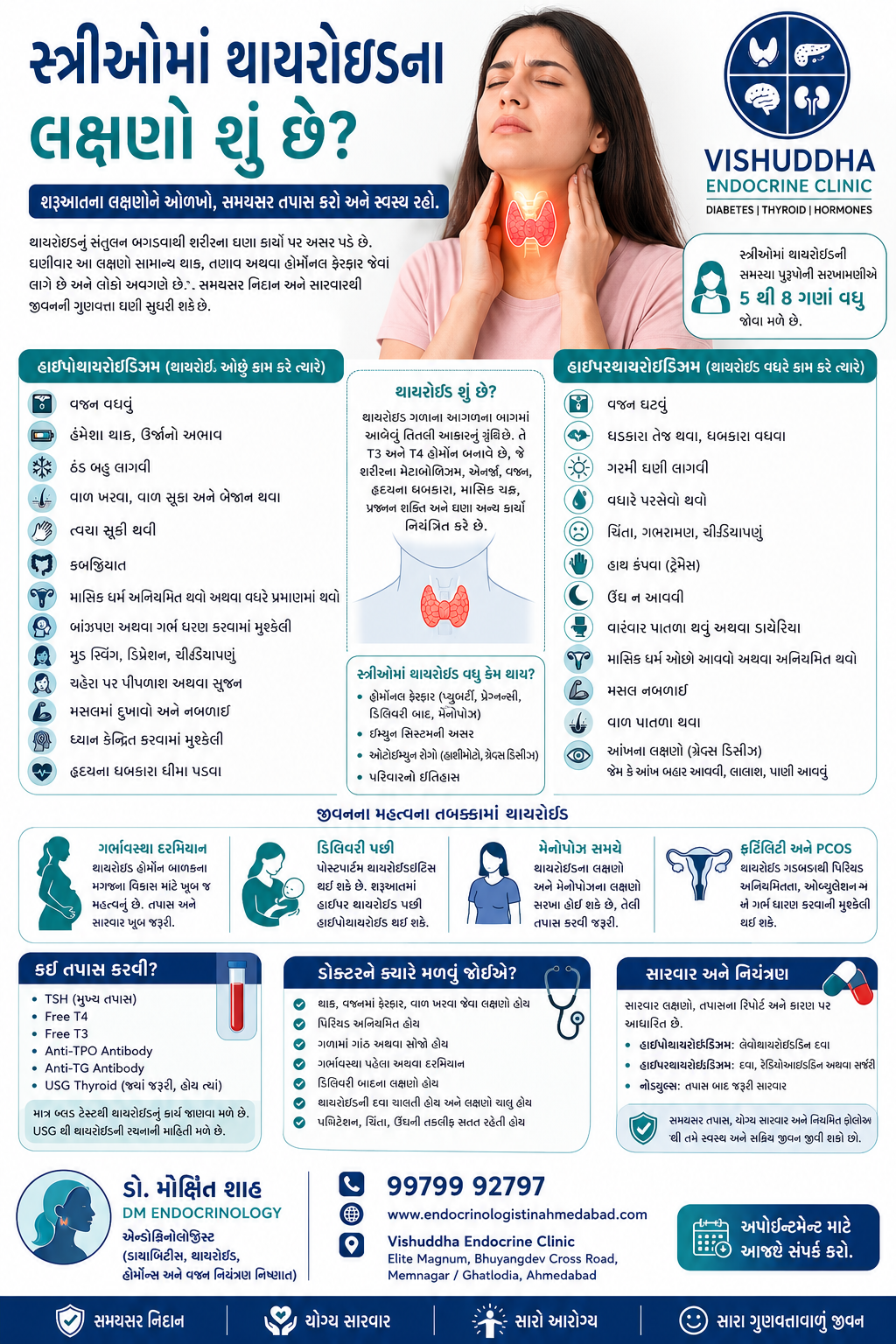
Thyroid symptoms in women are common, but they can be overlooked because many symptoms overlap with stress, hormonal changes, pregnancy, postpartum changes, or menopause.
Common symptoms include: fatigue, weight changes, hair loss, dry skin, constipation, feeling unusually cold or hot, menstrual changes, fertility problems, mood changes, palpitations, tremors, sleep problems, increased sweating, changes in bowel habits, and neck swelling.
The thyroid gland plays an important role in regulating metabolism, energy levels, body temperature, heart rate, digestion, menstrual cycles, and several other functions. When the thyroid produces too little or too much thyroid hormone, it can affect almost every system in the body.
Women are more likely than men to develop thyroid disorders, particularly hypothyroidism, hyperthyroidism, thyroid nodules, and autoimmune thyroid diseases.
If you are experiencing unexplained tiredness, weight changes, hair fall, menstrual irregularities, mood changes, palpitations, or changes in bowel habits, a thyroid evaluation may be appropriate.
Dr. Moxit Shah, DM Endocrinologist in Ahmedabad, provides evaluation and management of thyroid disorders, diabetes, obesity, and other hormonal conditions at Vishuddha Endocrine Clinic. For a broader overview, see the thyroid disorders guide and our guide to thyroid nodules and their evaluation.
What Is the Thyroid Gland?
The thyroid is a small, butterfly-shaped gland located at the front of the neck.
It produces thyroid hormones, mainly:
- Thyroxine (T4)
- Triiodothyronine (T3)
These hormones influence the body’s metabolism and help regulate:
- Energy production
- Heart rate
- Body temperature
- Brain function
- Digestion
- Muscle function
- Bone metabolism
- Menstrual cycles
- Fertility and pregnancy
Thyroid function is primarily controlled by the brain through the hypothalamus and pituitary gland.
The pituitary gland produces TSH (thyroid-stimulating hormone), which stimulates the thyroid to produce thyroid hormones.
Why Are Thyroid Problems More Common in Women?
Women are significantly more likely to develop thyroid disorders than men.
One important reason is the relationship between thyroid disease and the immune system. Autoimmune thyroid diseases such as Hashimoto’s thyroiditis and Graves’ disease are much more common in women.
Thyroid problems may also become apparent during important hormonal periods, including:
- Puberty
- Pregnancy
- After childbirth
- Perimenopause
- Menopause
This can sometimes make thyroid symptoms difficult to recognize because they may overlap with normal hormonal changes.
15 Common Thyroid Symptoms in Women
Thyroid symptoms vary depending on whether the thyroid is underactive (hypothyroidism) or overactive (hyperthyroidism).
Some women may have only mild symptoms, while others may experience several symptoms simultaneously.
Symptoms of Hypothyroidism in Women
Hypothyroidism occurs when the thyroid gland does not produce enough thyroid hormone.
Common symptoms include:
1. Unexplained Weight Gain
One of the most commonly reported symptoms is weight gain or difficulty losing weight.
Women may notice that their weight increases despite no major change in eating habits or physical activity.
However, thyroid-related weight gain is usually modest. Significant weight gain should not automatically be attributed to thyroid disease.
2. Persistent Tiredness
Feeling unusually tired or lacking energy despite adequate sleep can be an important symptom.
Some women describe:
- Low energy
- Sleepiness during the day
- Reduced stamina
- Difficulty completing routine activities
3. Feeling Cold
Women with hypothyroidism may feel colder than people around them.
Cold intolerance can be particularly noticeable in the hands and feet.
4. Hair Fall and Dry Hair
Thyroid disorders can affect the normal hair growth cycle.
Women may experience:
- Increased hair shedding
- Thinning of scalp hair
- Dry or coarse hair
- Brittle hair
- Loss of the outer portion of the eyebrows in some cases
Hair loss can have many other causes, including iron deficiency, nutritional deficiencies, stress, PCOS, and postpartum hormonal changes.
5. Dry Skin
Hypothyroidism can cause dry, rough, or flaky skin.
Some women may notice that their skin becomes drier than usual, particularly on the elbows, knees, and lower legs.
6. Constipation
A slower metabolism can reduce intestinal movement and lead to constipation.
Persistent constipation, especially when accompanied by tiredness, weight gain, or cold intolerance, may warrant thyroid testing.
7. Menstrual Irregularities
Thyroid hormones interact closely with the reproductive system.
Hypothyroidism can cause:
- Heavy menstrual bleeding
- Irregular periods
- Longer menstrual cycles
- Changes in menstrual flow
Thyroid disorders can also affect ovulation and fertility.
8. Fertility Problems
Thyroid dysfunction can interfere with ovulation and menstrual cycles.
Women undergoing evaluation for infertility may therefore require thyroid testing depending on their symptoms and clinical circumstances.
9. Mood Changes and Depression
Some women with hypothyroidism experience:
- Low mood
- Reduced motivation
- Difficulty concentrating
- Slower thinking
- Memory problems
However, these symptoms are not specific to thyroid disease and can occur with several other conditions.
10. Puffy Face or Swelling
Some women with significant hypothyroidism may develop puffiness around the eyes or face.
Swelling can also occur in the hands and feet.
11. Muscle Aches and Weakness
Hypothyroidism can sometimes cause:
- Muscle aches
- Cramps
- Muscle stiffness
- Generalized weakness
12. Slow Heart Rate
Thyroid hormones influence the cardiovascular system.
In hypothyroidism, the heart rate may become slower than usual.
Symptoms of Hyperthyroidism in Women
Hyperthyroidism occurs when the thyroid produces excessive thyroid hormone.
Symptoms can include:
1. Unexplained Weight Loss
Women may lose weight despite having a normal or increased appetite.
Unexpected weight loss should always be evaluated rather than automatically attributed to thyroid disease.
2. Palpitations or Fast Heartbeat
A woman may feel that her heart is:
- Racing
- Beating strongly
- Skipping beats
Persistent palpitations require medical evaluation because they can have several causes.
3. Excessive Sweating
Women with hyperthyroidism may feel unusually warm and sweat more than usual.
4. Heat Intolerance
A woman may feel uncomfortable in warm environments while others around her feel comfortable.
5. Anxiety and Irritability
Excess thyroid hormone can affect the nervous system and may lead to:
- Anxiety
- Irritability
- Restlessness
- Difficulty relaxing
- Feeling unusually nervous
6. Tremors
Fine shaking or trembling of the hands can occur with hyperthyroidism.
7. Difficulty Sleeping
Some women experience:
- Difficulty falling asleep
- Frequent awakening
- Restlessness
- Reduced sleep duration
8. Increased Bowel Movements
Hyperthyroidism can increase intestinal activity and may cause frequent bowel movements or diarrhea.
9. Menstrual Changes
Periods may become:
- Lighter
- Less frequent
- Irregular
Thyroid dysfunction can also affect fertility.
10. Muscle Weakness
Some women with significant hyperthyroidism develop weakness, particularly in the muscles around the hips and shoulders.
11. Hair Thinning
Hyperthyroidism can also affect the hair growth cycle and cause increased hair shedding or thinning.
12. Eye Symptoms
In Graves’ disease, some patients develop thyroid eye disease.
Symptoms may include:
- Dry or gritty eyes
- Eye redness
- Excessive watering
- Sensitivity to light
- Eyelid swelling
- Bulging or prominent eyes
- Double vision
Eye symptoms associated with Graves’ disease require appropriate medical assessment.
Thyroid Symptoms in Women During Pregnancy
Pregnancy causes significant changes in thyroid physiology.
Adequate thyroid hormone availability is particularly important during pregnancy because thyroid hormones play an important role in fetal development.
Symptoms of hypothyroidism during pregnancy may include:
- Excessive fatigue
- Constipation
- Cold intolerance
- Dry skin
- Hair changes
- Weight-related concerns
- Difficulty concentrating
However, many of these symptoms can also occur normally during pregnancy.
Women who have known thyroid disease, a history of thyroid problems, autoimmune disease, infertility, or other risk factors may require thyroid function testing according to their doctor’s recommendation.
Thyroid medication should never be stopped or changed during pregnancy without medical advice.
Thyroid Symptoms After Delivery
Thyroid problems can also occur after childbirth.
One condition is postpartum thyroiditis, an inflammatory thyroid condition that can occur during the first year after delivery.
It may initially cause symptoms of hyperthyroidism, followed by a period of hypothyroidism in some women.
Symptoms may include:
- Palpitations
- Anxiety
- Fatigue
- Weight changes
- Feeling unusually cold
- Constipation
- Hair loss
- Mood changes
Postpartum symptoms can easily be mistaken for normal exhaustion associated with caring for a newborn. Persistent or significant symptoms should therefore be discussed with a doctor.
Thyroid Symptoms During Menopause
Thyroid symptoms and menopausal symptoms can sometimes look very similar.
For example, both may cause:
- Fatigue
- Mood changes
- Sleep disturbances
- Weight changes
- Hair changes
- Changes in menstrual cycles
Therefore, not every symptom occurring around menopause is necessarily due to menopause.
A thyroid evaluation may be appropriate when symptoms are unexplained, persistent, or accompanied by other features suggestive of thyroid disease.
Can Thyroid Problems Cause Weight Gain?
Yes, hypothyroidism can contribute to weight gain.
However, thyroid dysfunction is not the only cause of weight gain.
Weight can also be affected by:
- Calorie intake
- Physical activity
- Sleep
- Stress
- Medications
- Insulin resistance
- PCOS
- Menopause
- Genetics
- Other hormonal conditions
When hypothyroidism is treated and thyroid hormone levels return to the appropriate range, some thyroid-related weight gain may improve. However, thyroid medication should not be used as a weight-loss treatment in people with normal thyroid function.
Can Thyroid Problems Cause Hair Fall?
Yes.
Both hypothyroidism and hyperthyroidism can affect the hair growth cycle.
However, hair loss in women is very common and may also result from:
- Iron deficiency
- Vitamin deficiencies
- PCOS
- Pregnancy and postpartum changes
- Stress
- Rapid weight loss
- Nutritional deficiencies
- Certain medications
- Female-pattern hair loss
Therefore, thyroid testing alone may not identify the cause of hair loss.
Can Thyroid Problems Affect Periods?
Yes.
Thyroid hormones interact with the reproductive system.
Hypothyroidism may be associated with heavy or irregular periods, while hyperthyroidism can cause lighter or less frequent periods.
If menstrual irregularities persist, a comprehensive evaluation may be needed rather than assuming that the thyroid is the only cause.
Thyroid and Fertility in Women
Thyroid dysfunction can affect reproductive health.
Uncontrolled thyroid disease may contribute to:
- Irregular ovulation
- Menstrual abnormalities
- Difficulty conceiving
- Pregnancy complications
Women planning pregnancy who have known thyroid disease should discuss thyroid management with their doctor before conception.
What Tests Are Used to Diagnose Thyroid Problems?
The initial evaluation commonly includes a blood test for:
TSH
TSH is usually the primary screening test for thyroid dysfunction.
Depending on the TSH result and clinical situation, doctors may recommend:
- Free T4
- Free T3
- Anti-TPO antibodies
- Anti-thyroglobulin antibodies
- TSH receptor antibodies
The exact tests depend on the patient’s symptoms and suspected thyroid condition.
When Is a Thyroid Ultrasound Required?
A thyroid ultrasound is primarily useful for evaluating the structure of the thyroid gland.
It can help assess:
- Thyroid nodules
- Cysts
- Enlargement of the thyroid
- Features of thyroiditis
- Suspicious nodules
- Cervical lymph nodes
Importantly, an ultrasound does not determine whether the thyroid is functioning normally.
A person can have an abnormal thyroid function test with a normal ultrasound, and a person can have thyroid nodules with normal thyroid hormone levels.
When Should a Woman See an Endocrinologist?
You should consider consulting an endocrinologist if you have:
- Persistent unexplained weight gain or weight loss
- Abnormal TSH or thyroid hormone results
- Thyroid swelling or a neck lump
- Persistent palpitations
- Significant menstrual irregularities
- Difficulty conceiving with suspected thyroid dysfunction
- Known thyroid disease requiring treatment adjustment
- Thyroid disease during pregnancy
- Postpartum thyroid symptoms
- Symptoms suggestive of Graves’ disease
- A thyroid nodule requiring evaluation
Can Thyroid Disease Be Cured?
The answer depends on the type of thyroid disorder.
Hypothyroidism
Most cases of permanent hypothyroidism are managed effectively with levothyroxine, a thyroid hormone replacement medicine.
Hyperthyroidism
Treatment options may include:
- Antithyroid medications
- Radioactive iodine in appropriate patients
- Surgery in selected cases
Thyroid Nodules
Many thyroid nodules are benign. However, some require further evaluation, including ultrasound assessment and, when indicated, fine-needle aspiration.
Treatment is individualized according to the cause and characteristics of the thyroid problem.
Do All Women With Thyroid Symptoms Need Thyroid Medicine?
No.
Having symptoms such as fatigue, hair fall, weight gain, or irregular periods does not automatically mean that thyroid medication is required.
Treatment should be based on:
- Thyroid function tests
- Clinical symptoms
- Underlying diagnosis
- Age
- Pregnancy status
- Associated medical conditions
- Antibody status in selected situations
Self-medication with thyroid hormone is not recommended.
Frequently Asked Questions About Thyroid Symptoms in Females
What are the most common thyroid symptoms in women?
Common symptoms may include fatigue, weight changes, hair loss, dry skin, constipation, menstrual irregularities, mood changes, cold intolerance, heat intolerance, palpitations, and sleep problems.
Does thyroid disease cause weight gain in women?
Hypothyroidism can contribute to weight gain, but significant weight gain usually has multiple contributing factors.
Can thyroid problems cause hair fall?
Yes. Both hypothyroidism and hyperthyroidism can cause increased hair shedding, although many other conditions can also cause hair loss.
Can thyroid problems affect periods?
Yes. Thyroid dysfunction can cause changes in menstrual frequency, duration, and flow and may affect fertility.
Is thyroid disease common during pregnancy?
Thyroid disorders can occur during pregnancy and may require careful monitoring and treatment.
Is thyroid ultrasound necessary for everyone?
No. Ultrasound is mainly used when there is a structural concern such as a thyroid nodule, swelling, or goiter. It is not routinely required simply because someone has thyroid symptoms.
Can thyroid disease be treated?
Yes. Most thyroid disorders can be effectively managed with appropriate treatment and regular monitoring.
Take-Home Message
Thyroid symptoms in females can be subtle and may overlap with symptoms caused by stress, nutritional deficiencies, PCOS, pregnancy, postpartum changes, or menopause.
Persistent symptoms such as unexplained weight changes, fatigue, hair loss, menstrual irregularities, palpitations, heat or cold intolerance, or neck swelling should not be ignored.
A simple blood test, usually starting with TSH, can help determine whether thyroid dysfunction may be contributing to the symptoms.
Early diagnosis and appropriate treatment can help women maintain better metabolic, reproductive, cardiovascular, and overall health.
Thyroid Specialist in Ahmedabad
If you are experiencing symptoms suggestive of a thyroid disorder or have an abnormal thyroid test, consultation with an endocrinologist can help determine the underlying cause and appropriate treatment.
Dr. Moxit Shah, DM Endocrinologist
9979992797
Vishuddha Endocrine Clinic
Ahmedabad
Specialized consultation for:
- Thyroid disorders
- Diabetes
- Obesity and weight management
- PCOS-related metabolic problems
- Thyroid nodules
- Pregnancy-related thyroid disorders
- Hormonal disorders
Book an appointment for personalized evaluation and treatment.
For a broader overview, read our thyroid disorders guide.