
One of the most common questions patients ask after being diagnosed with hypothyroidism is:
“Doctor, will I have to take thyroid medicine for the rest of my life?”
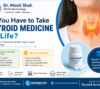
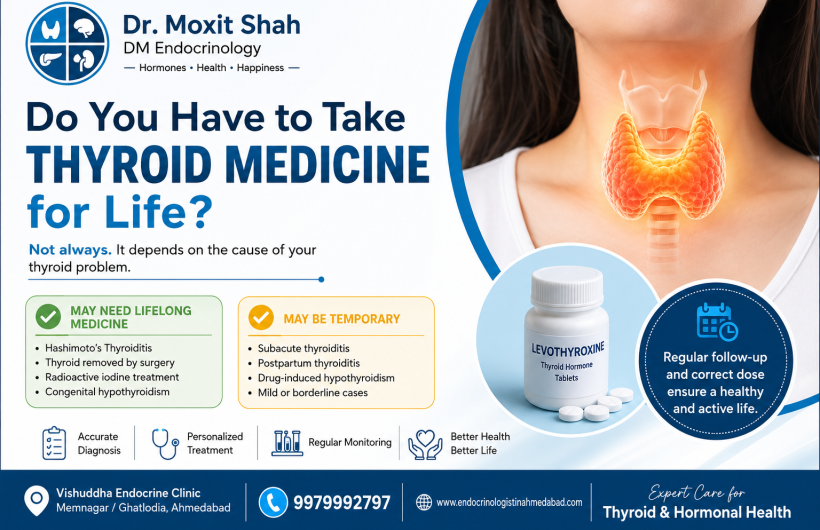
The answer is not always.
While many people need lifelong treatment, others may only require thyroid medication temporarily depending on the underlying cause of their thyroid problem.
As an Endocrinologist in Ahmedabad, I often help patients understand whether their thyroid medication is permanent or whether it can be safely reduced or stopped after proper evaluation.
Understanding Thyroid Hormone
The thyroid gland produces hormones (T4 and T3) that regulate:
- Metabolism
- Energy levels
- Body temperature
- Heart function
- Brain function
- Weight
- Menstrual cycles
- Fertility
When the thyroid cannot produce enough hormone, it results in hypothyroidism, which is treated with Levothyroxine, a synthetic form of thyroid hormone.
Does Everyone Need Thyroid Medicine Forever?
No.
Whether treatment is lifelong depends on why your thyroid became underactive.
Conditions That Usually Require Lifelong Thyroid Medicine
1. Hashimoto’s Thyroiditis (Most Common)
Hashimoto’s thyroiditis is an autoimmune disease where the immune system gradually destroys the thyroid gland.
Since the gland becomes permanently damaged, most patients require lifelong thyroid hormone replacement.
Signs include:
- Positive TPO antibodies
- Small or heterogeneous thyroid on ultrasound
- Persistently elevated TSH
2. Thyroid Removed by Surgery
If your thyroid has been completely removed due to:
- Thyroid cancer
- Large goiter
- Graves’ disease
- Thyroid nodules
You will require lifelong thyroid hormone replacement.
3. Radioactive Iodine Treatment
Patients treated with radioactive iodine for hyperthyroidism often develop permanent hypothyroidism and usually need lifelong medication.
4. Congenital Hypothyroidism
Babies born without a functioning thyroid gland require lifelong treatment to ensure normal growth and brain development.
Conditions Where Thyroid Medicine May Be Temporary
1. Subacute Thyroiditis
This viral inflammation of the thyroid often causes temporary thyroid dysfunction.
Many patients recover normal thyroid function within several months.
2. Postpartum Thyroiditis
Some women develop thyroid problems after pregnancy.
Many recover completely within 6–12 months.
3. Drug-Induced Hypothyroidism
Certain medications such as:
- Amiodarone
- Lithium
- Interferon
can cause temporary thyroid dysfunction.
Stopping the medication (when appropriate) may allow thyroid function to recover.
4. Mild or Borderline Hypothyroidism
Some patients with mildly elevated TSH may not require lifelong treatment.
Periodic reassessment can determine whether medication is still necessary.
Can Thyroid Medicine Be Stopped?
Sometimes, yes—but never stop thyroid medication on your own.
Stopping treatment without medical advice can lead to:
- Fatigue
- Weight gain
- Constipation
- Depression
- High cholesterol
- Infertility
- Heart problems
- Severe hypothyroidism (myxedema in rare cases)
Your endocrinologist may recommend a supervised trial off medication only if it is medically appropriate.
How Doctors Decide Whether to Stop Thyroid Medicine
Your endocrinologist will evaluate:
- Why thyroid medicine was started
- Current TSH level
- Free T4
- TPO antibodies
- Thyroid ultrasound findings
- Duration of treatment
- Symptoms
- Pregnancy plans
- Previous thyroid surgery or radioactive iodine treatment
If suitable, medication may be stopped temporarily and thyroid function rechecked after several weeks.
What Happens If You Miss Thyroid Medicine?
Occasional missed doses usually do not cause immediate harm because levothyroxine has a long half-life.
However, repeatedly missing doses can lead to:
- Increased TSH
- Return of hypothyroid symptoms
- Poor cholesterol control
- Reduced concentration
- Weight gain
- Fatigue
Take your medicine regularly and discuss any concerns with your doctor.
Is Thyroid Medicine Safe for Long-Term Use?
Yes.
Levothyroxine has been used safely for decades.
When taken at the correct dose and monitored regularly, it is:
- Safe
- Effective
- Affordable
- Well tolerated
- Suitable during pregnancy
- Appropriate for elderly patients with proper dose adjustments
Problems usually occur only if the dose is too high or too low.
Tips for Taking Thyroid Medicine Correctly
To ensure proper absorption:
- Take it on an empty stomach.
- Take it at the same time every day.
- Wait 30–60 minutes before breakfast.
- Avoid taking calcium or iron supplements within 4 hours.
- Do not change brands without consulting your doctor.
- Have your thyroid function checked periodically.
Frequently Asked Questions (FAQs)
Can hypothyroidism be cured permanently?
It depends on the cause. Autoimmune hypothyroidism is usually permanent, while some forms of thyroiditis are temporary.
Can I stop thyroid medicine after my reports become normal?
Normal thyroid tests usually indicate that the medication is working. Do not stop treatment unless your doctor advises a supervised trial.
Will taking thyroid medicine damage my thyroid?
No. Levothyroxine replaces the hormone your thyroid cannot make and does not damage the gland.
Can lifestyle changes replace thyroid medicine?
A healthy lifestyle supports overall health, but it cannot replace thyroid hormone in patients with true hypothyroidism.
How often should thyroid tests be repeated?
Most stable patients require testing every 6–12 months, although your doctor may recommend more frequent monitoring after starting or changing the dose.
When Should You See an Endocrinologist?
Consult an endocrinologist if you have:
- Persistent fatigue
- Weight changes
- Hair loss
- Irregular periods
- Infertility
- Neck swelling
- Abnormal TSH reports
- Difficulty adjusting your thyroid medication
- Questions about whether you need lifelong treatment
Consult Dr. Moxit Shah – Endocrinologist in Ahmedabad
If you have been diagnosed with hypothyroidism or are unsure whether your thyroid medicine is lifelong, seek expert evaluation before making any changes.
Dr. Moxit Shah, DM Endocrinology specializes in the diagnosis and management of:
- Hypothyroidism
- Hyperthyroidism
- Hashimoto’s thyroiditis
- Thyroid nodules
- Goiter
- Thyroid disorders during pregnancy
- Diabetes
- Obesity and weight management
- Hormonal disorders
📞 Appointment: 9979992797
🌐 Website: https://endocrinologistinahmedabad.com
Key Takeaway
Not everyone who starts thyroid medicine needs it for life. The need for lifelong treatment depends on the underlying cause of hypothyroidism. Some conditions require permanent hormone replacement, while others may resolve over time. Never stop thyroid medication without consulting an endocrinologist, as doing so can lead to the return of symptoms and serious health complications.