
Everything You Need to Know About GLP-1 Therapy for Type 2 Diabetes and Weight Loss
By Dr. Moxit Shah, DM Endocrinology
Endocrinologist | Diabetes, Thyroid & Weight Loss Specialist in Ahmedabad
Introduction
Type 2 diabetes is no longer managed with blood sugar control alone. Today’s goal is to reduce the risk of heart disease, protect the kidneys, promote weight loss, and improve long-term health. One of the biggest breakthroughs in diabetes treatment over the past decade has been the development of GLP-1 receptor agonists.
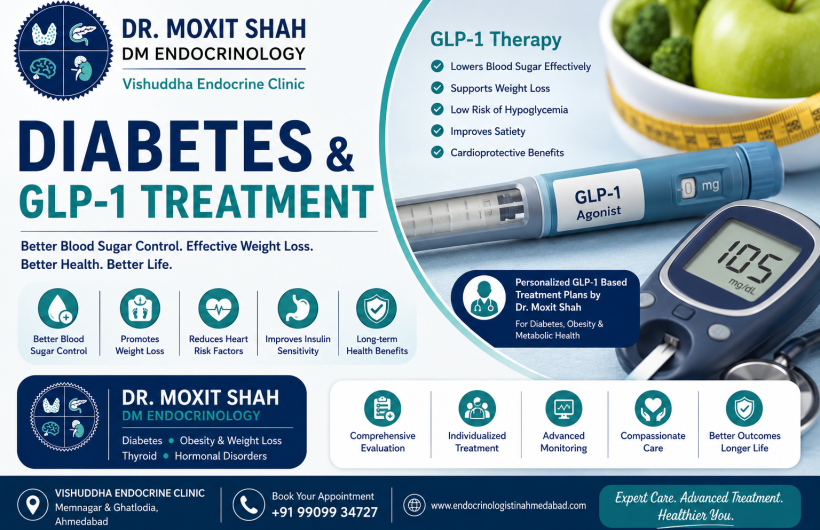
These medications not only lower blood sugar but also help patients lose weight, reduce appetite, improve insulin function, and lower the risk of heart attacks and strokes in many high-risk individuals.
At Vishuddha Endocrine Clinic, Dr. Moxit Shah provides evidence-based, personalized diabetes care, including advanced therapies such as GLP-1 receptor agonists and dual GIP/GLP-1 agonists for eligible patients.
What is Type 2 Diabetes?
Type 2 diabetes occurs when:
- The body becomes resistant to insulin.
- The pancreas gradually produces less insulin.
- Blood sugar levels remain elevated.
Over time, uncontrolled diabetes damages the heart, kidneys, eyes, nerves, and blood vessels.
India is often referred to as the Diabetes Capital of the World, with millions of adults living with diabetes or prediabetes.
Treatment Goals in Diabetes
Modern diabetes management focuses on:
- Achieving HbA1c targets
- Reducing body weight
- Preventing hypoglycemia
- Protecting the heart
- Preserving kidney function
- Improving quality of life
- Preventing long-term complications
GLP-1 medications address many of these goals simultaneously.
What is GLP-1?
GLP-1 stands for Glucagon-Like Peptide-1, a natural hormone produced in the intestine after eating.
It helps regulate blood sugar by:
- Stimulating insulin release only when blood sugar is high
- Suppressing glucagon secretion
- Slowing stomach emptying
- Reducing appetite
- Increasing satiety
People with Type 2 diabetes often have a reduced GLP-1 response, contributing to poor glucose control and weight gain.
What are GLP-1 Receptor Agonists?
GLP-1 receptor agonists are medications that mimic the action of natural GLP-1, helping control blood sugar while promoting weight loss.
These medicines are usually taken once daily or once weekly.
Common GLP-1 Medications Available
Semaglutide
- Ozempic® (for diabetes)
- Wegovy® (for obesity)
Liraglutide
- Victoza®
- Saxenda®
Dulaglutide
- Trulicity®
Tirzepatide
Although technically a dual GIP/GLP-1 receptor agonist, tirzepatide works through GLP-1 pathways as well and has shown greater glucose lowering and weight loss than earlier GLP-1 medications.
Examples include:
- Mounjaro®
- Yurpeak® (available in India)
How Do GLP-1 Medicines Work?
GLP-1 medications help by:
1. Lowering Blood Sugar
They increase insulin release only when blood sugar is elevated.
This reduces the risk of hypoglycemia compared with some older diabetes medications.
2. Reducing Appetite
Patients naturally feel full earlier and eat smaller portions.
3. Promoting Weight Loss
Weight loss improves:
- Blood sugar
- Blood pressure
- Cholesterol
- Fatty liver
- Sleep apnea
- Joint pain
4. Slowing Gastric Emptying
Food leaves the stomach more slowly, reducing post-meal blood sugar spikes and helping maintain fullness.
5. Cardiovascular Protection
Certain GLP-1 medications have been shown to reduce the risk of:
- Heart attack
- Stroke
- Cardiovascular death
particularly in people with Type 2 diabetes and established cardiovascular disease.
Benefits of GLP-1 Therapy
GLP-1 therapy offers several advantages:
- Significant HbA1c reduction
- Effective weight loss
- Lower risk of hypoglycemia
- Better blood pressure control
- Improved cholesterol profile
- Reduction in fatty liver disease
- Cardiovascular protection (with selected agents)
- Improved quality of life
Who Can Benefit from GLP-1 Therapy?
GLP-1 medications are especially beneficial for people with:
- Type 2 diabetes and obesity
- Poor blood sugar control despite oral medications
- High cardiovascular risk
- Established heart disease
- Chronic kidney disease (selected patients)
- Fatty liver disease
- Prediabetes with obesity (in selected cases)
- Patients requiring weight reduction
Who Should Not Take GLP-1 Medications?
These medications may not be suitable for everyone.
Your endocrinologist may advise against GLP-1 therapy if you have:
- Type 1 diabetes
- Pregnancy or breastfeeding
- History of medullary thyroid carcinoma (MTC)
- Multiple endocrine neoplasia type 2 (MEN2)
- Severe gastroparesis
- Known allergy to the medication
Treatment decisions should always be individualized.
Common Side Effects
The most common side effects are gastrointestinal and usually improve over time:
- Nausea
- Vomiting
- Diarrhea
- Constipation
- Reduced appetite
- Bloating
- Acid reflux
Starting with a low dose and gradually increasing it helps minimize side effects.
Serious but Rare Risks
Rare complications may include:
- Gallstones
- Gallbladder inflammation
- Pancreatitis
- Severe dehydration
- Worsening diabetic retinopathy in selected patients with rapid HbA1c reduction
These events are uncommon but should be discussed with your doctor before starting therapy.
GLP-1 vs Older Diabetes Medicines
| Feature | GLP-1 Therapy | Sulfonylureas |
|---|---|---|
| Weight | Loss | Gain |
| Hypoglycemia | Low risk | Higher risk |
| Appetite | Reduced | No effect |
| Heart Protection | Yes (selected agents) | No proven benefit |
| Weekly Option | Yes | No |
GLP-1 vs Insulin
Many patients believe insulin is always the next step after tablets. In reality, some patients may benefit from GLP-1 therapy before insulin, particularly those with obesity and preserved insulin production.
Compared with insulin, GLP-1 therapy often provides:
- Weight loss instead of weight gain
- Lower risk of hypoglycemia
- Fewer injections (weekly options)
- Better patient satisfaction
However, insulin remains essential for many individuals, especially those with Type 1 diabetes, severe hyperglycemia, or advanced beta-cell failure.
Can GLP-1 Medications Reverse Diabetes?
GLP-1 medications do not cure diabetes, but they can help many patients achieve excellent blood sugar control. Combined with substantial weight loss and lifestyle changes, some individuals with Type 2 diabetes may achieve remission.
Lifestyle Changes Remain Essential
Even the best medication works best when combined with healthy habits:
Eat a Balanced Diet
- High-fiber vegetables
- Whole grains
- Lean proteins
- Healthy fats
- Avoid sugary beverages and processed foods
Exercise Regularly
Aim for at least:
- 150 minutes of moderate exercise per week
- Strength training twice weekly
Sleep Well
Poor sleep can worsen insulin resistance.
Manage Stress
Chronic stress increases blood sugar through hormonal changes.
Monitoring While on GLP-1 Therapy
Regular follow-up helps ensure safe and effective treatment. Monitoring may include:
- HbA1c every 3–6 months
- Weight and BMI
- Blood pressure
- Kidney function
- Liver function (if indicated)
- Symptoms of gastrointestinal intolerance
- Medication adherence and dose adjustments
Frequently Asked Questions (FAQs)
Is GLP-1 insulin?
No. GLP-1 medications are not insulin. They stimulate your body to release insulin only when blood sugar is high.
Will I lose weight?
Most patients experience weight loss, but the amount varies depending on the medication, dose, diet, exercise, and individual response.
Can GLP-1 replace insulin?
Not always. Some people can delay or reduce insulin use, but others still need insulin for optimal diabetes control.
Are GLP-1 medications safe?
When prescribed appropriately and monitored by an endocrinologist, GLP-1 medications have a well-established safety profile. Like all medications, they have potential side effects and are not suitable for everyone.
How long do I need to take GLP-1 therapy?
Diabetes is a chronic condition, and GLP-1 therapy is usually intended for long-term management. The duration depends on your blood sugar control, weight goals, response to treatment, side effects, and overall health. Stopping the medication may lead to weight regain and worsening blood sugar in some individuals, so any decision should be made with your endocrinologist.
Why Choose Dr. Moxit Shah for GLP-1 Therapy?
As a DM Endocrinologist in Ahmedabad, Dr. Moxit Shah offers:
- Comprehensive diabetes evaluation
- Personalized GLP-1 treatment plans
- Weight management programs
- Insulin optimization
- Continuous Glucose Monitoring (CGM) interpretation
- Thyroid and endocrine care
- Long-term follow-up and lifestyle counselling
Treatment is tailored to each patient’s medical history, weight, cardiovascular risk, and treatment goals.
Book Your Consultation
If you have Type 2 diabetes, obesity, or difficulty controlling your blood sugar, modern therapies such as GLP-1 receptor agonists may be appropriate.
Schedule a consultation with Dr. Moxit Shah at Vishuddha Endocrine Clinic, Ahmedabad, to determine the most suitable treatment plan for your needs.
contact-9979992797