
Expert Advice by Dr. Moxit Shah, Endocrinologist in Ahmedabad
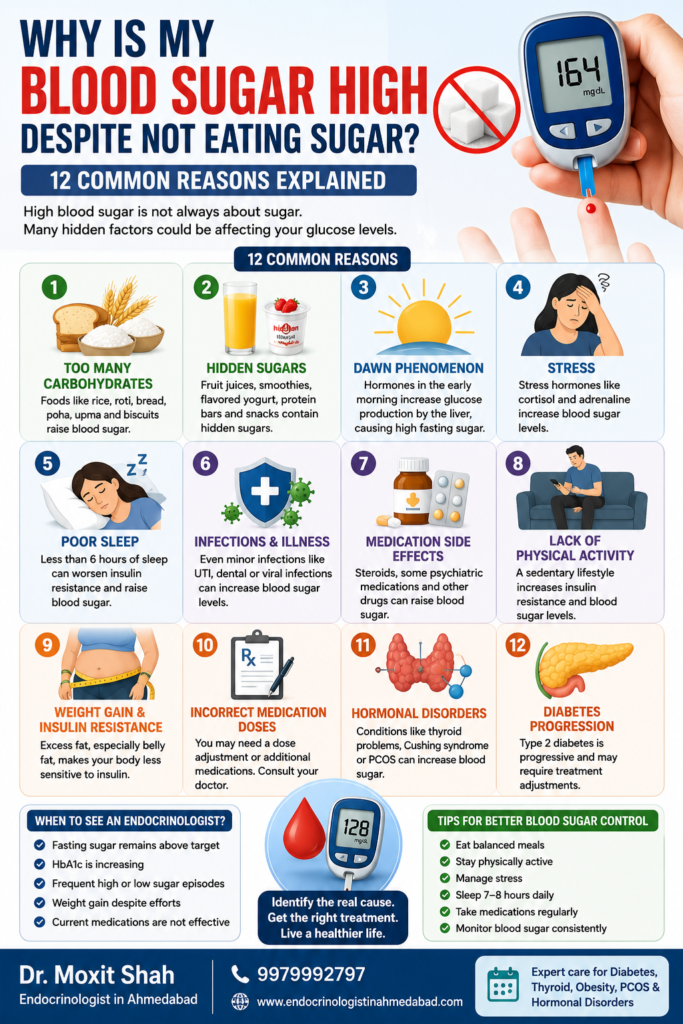
One of the most frustrating things for people with diabetes is seeing high blood sugar levels despite avoiding sweets and sugar.
Many patients tell me:
“Doctor, I haven’t eaten any sugar for weeks. Why is my blood sugar still high?”
The truth is that sugar is only one factor affecting blood glucose levels. Several hidden causes can keep blood sugar elevated even when you are trying your best.
In this article, I explain the most common reasons why blood sugar remains high despite avoiding sugar and what you can do about it.
1. You’re Eating Too Many Carbohydrates
Many people avoid sweets but consume large amounts of:
- Rice
- Roti
- Bread
- Biscuits
- Poha
- Upma
- Khakhra
- Breakfast cereals
Your body converts these foods into glucose.
Even “healthy” carbohydrates can raise blood sugar if consumed in excess.
2. Hidden Sugars in Foods
Many foods marketed as healthy contain significant amounts of sugar.
Examples include:
- Fruit juices
- Smoothies
- Flavored yogurt
- Protein bars
- Energy drinks
- Packaged snacks
- Granola
Always read nutrition labels carefully.
3. Dawn Phenomenon
Many patients wake up with high fasting blood sugar despite eating well the previous day.
This occurs because early morning hormones increase glucose production by the liver.
Signs include:
- Normal bedtime glucose
- High morning glucose
- Persistent fasting hyperglycemia
An endocrinologist can help identify and manage this condition.
4. Stress Can Raise Blood Sugar
Physical and emotional stress trigger the release of:
- Cortisol
- Adrenaline
These hormones increase blood sugar levels.
Common triggers include:
- Work stress
- Financial worries
- Family problems
- Sleep deprivation
5. Poor Sleep Quality
Research consistently shows that poor sleep can worsen insulin resistance.
People sleeping less than 6 hours often experience:
- Higher fasting glucose
- Increased appetite
- Weight gain
- Poor diabetes control
6. Infections and Illness
Even a minor infection can increase blood sugar levels.
Common examples include:
- Urinary tract infections
- Dental infections
- Skin infections
- Viral illnesses
If blood sugars suddenly worsen, an underlying infection should be considered.
7. Medication Side Effects
Several medications can increase blood sugar.
These include:
- Steroids
- Certain psychiatric medications
- Some asthma treatments
- Immunosuppressive drugs
Always inform your doctor about all medications you are taking.
8. Lack of Physical Activity
Exercise helps muscles absorb glucose efficiently.
A sedentary lifestyle can result in:
- Increased insulin resistance
- Weight gain
- Higher blood sugar levels
Even a 30-minute daily walk can make a significant difference.
9. Weight Gain and Insulin Resistance
Excess body fat, particularly around the abdomen, can worsen insulin resistance.
This means the body requires more insulin to maintain normal glucose levels.
Weight loss often improves diabetes dramatically.
10. Incorrect Diabetes Medication Doses
Sometimes patients require:
- Medication adjustment
- Additional medications
- Insulin therapy
- Newer treatments such as GLP-1 receptor agonists
Do not increase doses on your own.
11. Hormonal Disorders
Certain endocrine conditions can elevate blood sugar.
Examples include:
- Cushing syndrome
- Acromegaly
- Hyperthyroidism
- PCOS
These conditions are often overlooked.
12. Diabetes Progression
Type 2 diabetes is a progressive condition.
Over time, the pancreas may produce less insulin.
Even patients who were previously well-controlled may eventually need treatment changes.
When Should You See an Endocrinologist?
You should seek specialist evaluation if:
- Fasting sugar remains above target
- HbA1c is increasing
- You are gaining weight despite efforts
- You experience frequent glucose fluctuations
- Current medications are not working
Early intervention can prevent complications involving the eyes, kidneys, nerves, and heart.
Frequently Asked Questions
Can rice increase blood sugar even if I avoid sweets?
Yes. Rice is rapidly converted into glucose and can significantly raise blood sugar.
Can stress alone cause high blood sugar?
Absolutely. Stress hormones can increase blood glucose even without dietary changes.
Can diabetes worsen over time?
Yes. Type 2 diabetes is often progressive and may require treatment adjustments.
Final Takeaway
If your blood sugar is high despite avoiding sugar, the cause is often hidden elsewhere.
Carbohydrates, stress, poor sleep, infections, medications, hormonal disorders, and diabetes progression are among the most common reasons.
Rather than simply eliminating sweets, it is important to identify the underlying cause and develop a personalized treatment plan.
About Dr. Moxit Shah
Dr. Moxit Shah is an endocrinologist in Ahmedabad specializing in diabetes, obesity, thyroid disorders, PCOS, osteoporosis, and hormonal diseases.
For expert diabetes care and personalized treatment plans, book a consultation today.
📞 9979992797
🌐 www.endocrinologistinahmedabad.com