
By Dr. Moxit Shah, DM Endocrinologist
Vishuddha Endocrine Clinic, Ahmedabad
Being told that your thyroid is “overactive” can be worrying.
You may have a fast heartbeat, tremor, sweating, anxiety, weight loss or difficulty sleeping.
The good news: Hyperthyroidism is treatable.
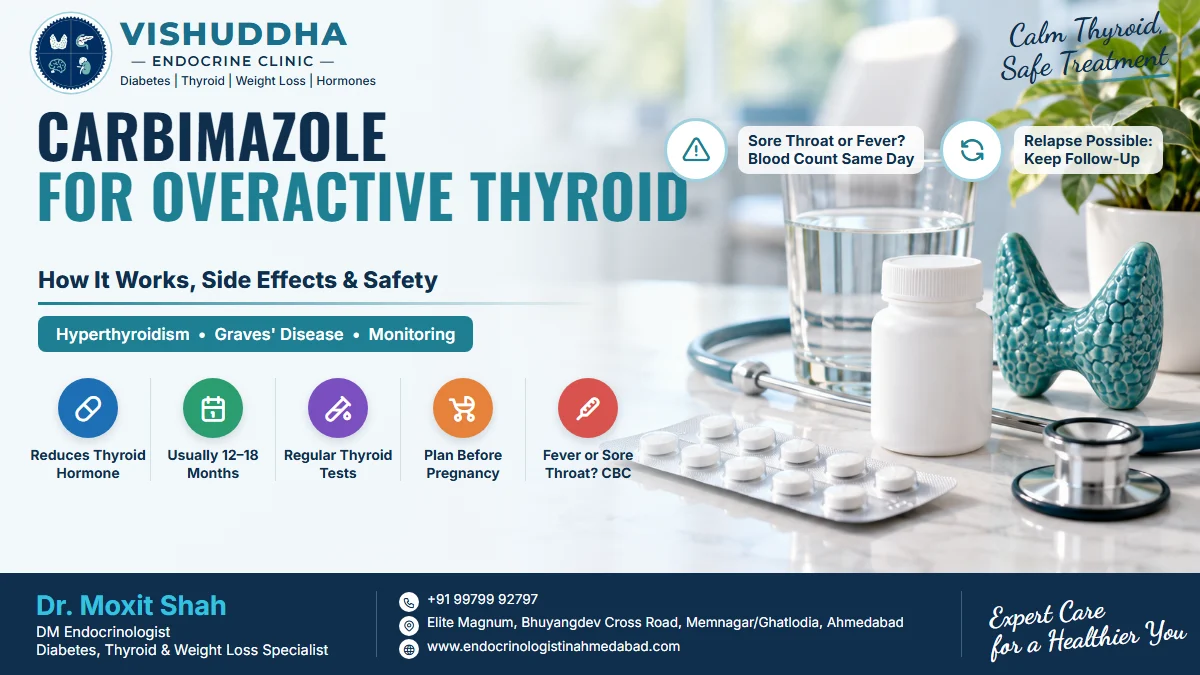
Carbimazole is one of the most commonly used medicines for Hyperthyroidism in India. It controls excess thyroid hormone production, and in some people with Graves’ Disease it can eventually be stopped if the disease goes into remission. But it needs careful monitoring. This guide explains how Carbimazole works, its side effects, and the warning signs every patient should know.
What is Hyperthyroidism?
Hyperthyroidism means the thyroid gland is producing too much thyroid hormone, which speeds up the body’s metabolism. Common symptoms include:
- Palpitations
- Trembling hands
- Excessive sweating and heat intolerance
- Unexplained weight loss
- Anxiety or irritability
- Frequent bowel movements
- Muscle weakness
- Difficulty sleeping
- Menstrual changes
Read more about overactive thyroid and Hypothyroidism vs Hyperthyroidism.
What is Graves’ Disease?
Graves’ Disease is an autoimmune condition and one of the most common causes of Hyperthyroidism. The immune system makes antibodies that stimulate the thyroid to overproduce hormone.
It may also cause an enlarged thyroid (Goitre) and eye symptoms. Other causes of Hyperthyroidism include overactive thyroid nodules and some types of thyroid inflammation. The cause matters, because treatment can differ. See autoimmune thyroid disorders.
How does Carbimazole work?
Carbimazole is an antithyroid medicine. In the body it is converted into Methimazole, its active form, which reduces the thyroid’s ability to make new hormone.
Carbimazole → Methimazole → less new thyroid hormone
It does not remove hormone already in the blood, so symptoms and blood tests improve gradually over weeks, not overnight.
Is Carbimazole a cure for Graves’ Disease?
No.
Carbimazole controls hormone production while the autoimmune process settles. In Graves’ Disease, a course of about 12 to 18 months is commonly used in suitable patients, as described in American Thyroid Association guidance, followed by an assessment for remission. The duration is individualized.
Can Hyperthyroidism come back after stopping Carbimazole?
Yes.
Relapse is common after stopping, particularly in Graves’ Disease. Before stopping, your doctor may check thyroid function and, when appropriate, TSH Receptor Antibodies (TRAb).
A patient once told us:
“I felt completely normal, so I thought I was cured.”
Feeling normal is encouraging, but it does not prove remission. Follow-up remains important even after treatment stops.
Do I need regular blood tests on Carbimazole?
Yes.
Your doctor will monitor TSH, Free T4 and sometimes Free T3 to adjust the dose. The schedule depends on severity and the stage of treatment. Understand your report with our thyroid blood test guide.
Do not change or stop Carbimazole just because one test has improved.
What are the common side effects of Carbimazole?
- Skin rash, itching or hives
- Joint pain
- Changes in taste
- Mild stomach upset
Report a rash or itching to your doctor, who will decide whether to continue, adjust or change the medicine.
What is Agranulocytosis, and why does it matter?
Agranulocytosis is a rare but serious side effect of antithyroid medicines: a sudden, severe fall in the white blood cells that fight infection. It can come on quickly, so every patient should know the warning signs.
What should I do if I get a sore throat or fever?
Act the same day. If you take Carbimazole and develop:
- Fever
- A significant sore throat
- Mouth ulcers
- Any other sign of infection
Stop Carbimazole, get a blood count (CBC) the same day, and contact your doctor or seek urgent care. Do not restart it until your doctor says it is safe.
This is the single most important safety rule for anyone taking an antithyroid medicine.
Can Carbimazole affect the liver?
Rarely, yes. Contact your doctor promptly for yellow eyes or skin, dark urine, unusual itching, abdominal pain or marked weakness.
What if I am pregnant or planning pregnancy?
Tell your doctor as soon as you plan a pregnancy, miss a period or find out you are pregnant.
Carbimazole and Methimazole have been linked with a pattern of birth defects when used in early pregnancy. That is why Propylthiouracil is generally preferred during the first trimester when treatment is needed, with some doctors switching back after the first trimester. Propylthiouracil has its own liver-safety concerns, so the plan is individual.
Do not stop treatment on your own, because untreated Hyperthyroidism is also risky in pregnancy. Read thyroid disease and pregnancy.
Can I breastfeed while taking Carbimazole?
Usually, yes. In moderate doses, Carbimazole/Methimazole is generally considered compatible with breastfeeding. Discuss the dose and monitoring with your doctor.
Can a beta-blocker help my symptoms?
Yes. A beta-blocker can ease palpitations, tremor and shakiness while Carbimazole starts working. It does not reduce thyroid hormone production. Whether it suits you depends on your other health conditions, such as Asthma.
What are the alternatives to Carbimazole?
| Treatment | How it works | Advantages | Important considerations |
|---|---|---|---|
| Carbimazole | Reduces new hormone production | Controls Hyperthyroidism without destroying the thyroid | Needs monitoring; rare Agranulocytosis and liver problems |
| Propylthiouracil | Reduces hormone production and T4 to T3 conversion | Preferred in early pregnancy | Liver toxicity is an important concern |
| Radioactive Iodine | Destroys overactive thyroid tissue | Definitive treatment for many | Not in pregnancy; usually leads to Hypothyroidism; may worsen thyroid eye disease |
| Surgery | Removes the thyroid | Rapid, definitive | Operation needed; lifelong thyroid hormone replacement after total removal |
Radioactive Iodine or surgery may be considered when Hyperthyroidism relapses, antithyroid medicines are unsuitable, there is a large Goitre or certain nodules, or the patient prefers definitive treatment. After either, most people need thyroid hormone replacement. See how to take Levothyroxine correctly.
Hyperthyroidism treatment in Ahmedabad
At Vishuddha Endocrine Clinic, Dr. Moxit Shah confirms the diagnosis and its cause, using symptoms, thyroid examination, TSH, Free T4, Free T3, TSH Receptor Antibodies and ultrasound when needed, before planning treatment.
If you already take Carbimazole, bring your previous thyroid reports and a list of all your medicines.
Frequently Asked Questions About Carbimazole
Can I stop Carbimazole when my TSH becomes normal?
No. A normal test shows the treatment is working. Stopping too early can lead to relapse. Your doctor will decide when to stop.
Is Carbimazole the same as Methimazole?
Carbimazole is converted into Methimazole in the body, so they work the same way.
Can I take Carbimazole during pregnancy?
It depends on the stage. Propylthiouracil is generally preferred in the first trimester. Speak to your doctor as soon as pregnancy is planned or confirmed.
What is the most important warning sign on Carbimazole?
Fever, sore throat or mouth ulcers. Stop the medicine and get a blood count the same day.
Can Graves’ Disease come back after treatment?
Yes. Some people stay in long-term remission, while others relapse. Long-term follow-up is important.
Final Takeaway
Carbimazole is an effective, well-established treatment for Hyperthyroidism when it is prescribed and monitored properly.
Correct diagnosis + appropriate Carbimazole treatment + regular thyroid tests + knowing the Agranulocytosis warning signs + pregnancy planning + long-term follow-up.
If you take Carbimazole and develop a sore throat, fever or mouth ulcers, stop the medicine and get a blood count the same day.
Dr. Moxit Shah
DM Endocrinologist
Vishuddha Endocrine Clinic, Ahmedabad
📞 +91 99799 92797
📍 Elite Magnum, Bhuyangdev Cross Road, Ahmedabad
🌐 endocrinologistinahmedabad.com
This article is for educational purposes only and does not replace an individual medical consultation. Prescription medicines should be started, adjusted or stopped only under the supervision of a qualified healthcare professional.