
By Dr. Moxit Shah | Endocrinologist in Ahmedabad
“Will I have to take this medicine forever?” is one of the most common questions I hear from newly diagnosed Diabetes patients. The honest answer is: it depends — on your type of Diabetes, how early it was caught, and how much you are able to change through lifestyle. Here is what actually determines the answer.

Type 1 Diabetes: Insulin Is Lifelong
In Type 1 Diabetes, the immune system has destroyed the insulin-producing cells in the pancreas. The body simply cannot make insulin on its own, regardless of diet or exercise. For Type 1 patients, insulin is not optional and is needed for life — there is currently no diet, supplement, or lifestyle change that replaces this.
Type 2 Diabetes: It’s More Nuanced
Type 2 Diabetes is different. Here, the body still makes insulin, but does not use it effectively — a state called Insulin resistance. This means the picture can genuinely change over time, in either direction:
- Medication may increase if blood sugar control worsens over the years, which is common as the pancreas gradually produces less insulin.
- Medication may reduce or, in some cases, stop if significant weight loss, dietary change, and consistent exercise improve insulin sensitivity enough. This is sometimes called Diabetes remission.
Remission is more achievable soon after diagnosis, with significant and sustained weight loss, and is less likely the longer someone has had Diabetes. For a deeper look at what remission actually involves, see our guides on Can Type 2 Diabetes Go Into Remission? and Can Diabetes Be Cured Without Medicines?
Why You Should Never Stop Medicine on Your Own
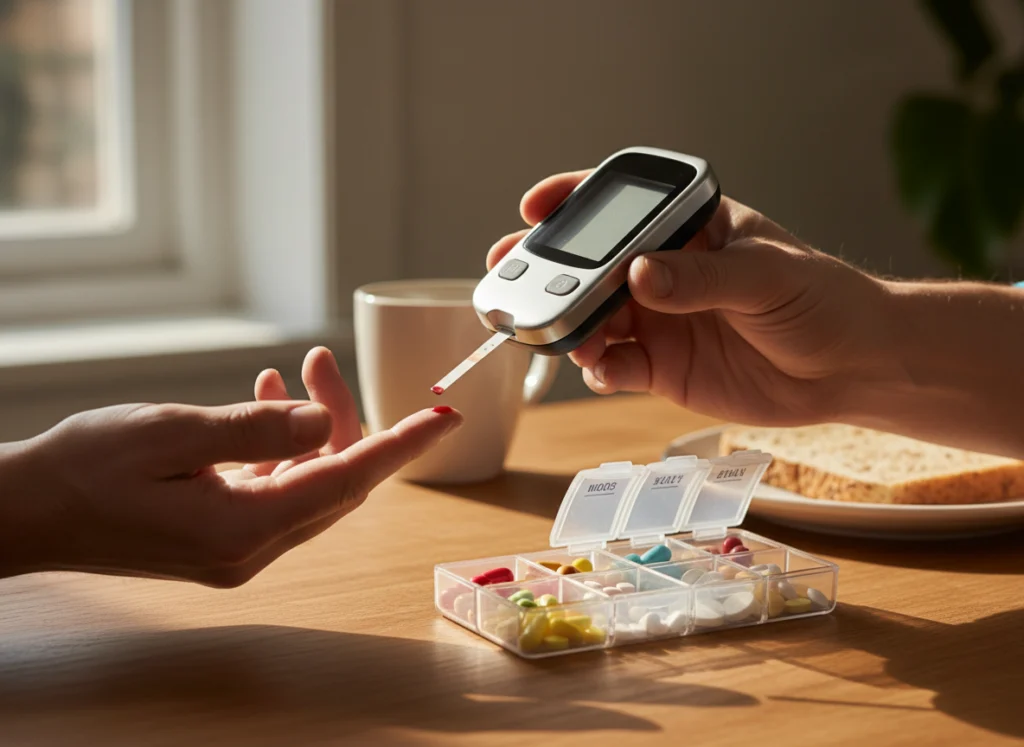
A common and risky mistake is stopping medication because blood sugar “looks fine” for a few weeks. Often, this is because the medicine is working — not because the underlying condition has resolved. Stopping abruptly can cause blood sugar to rise sharply, sometimes without obvious symptoms at first, while quietly causing damage to the eyes, kidneys, nerves, and heart over time.
Any change in your medication — reducing the dose, switching, or stopping — should be a decision made together with your endocrinologist, guided by regular blood tests, not by how you feel day to day.
What Actually Determines the Outcome
- How early Diabetes was diagnosed — earlier intervention generally gives more flexibility later
- How much weight loss is achieved and sustained, where relevant
- Consistency of diet and physical activity over months and years, not just weeks
- How much natural insulin production remains, which your doctor can assess through specific tests
For a structured approach to daily, weekly, and long-term management, see our Diabetes Management Plan: Daily, Weekly and Yearly Checklist.
Final Thoughts
“Lifelong” is not always the right word for Type 2 Diabetes medication — but “long-term commitment” usually is, even when the goal is eventually reducing or coming off medicines. The path looks different for every patient, which is exactly why this should be reviewed regularly with an endocrinologist rather than assumed either way.
Consult Dr. Moxit Shah, DM Endocrinology, to understand where you stand and what realistic options are available for your treatment plan.
📞 Book Your Appointment Today
Dr. Moxit Shah
DM Endocrinology (IPGMER, Kolkata)
Consultant Endocrinologist
📱 Call / WhatsApp: 9979992797