
Thyroid Disorders: Everything You Need to Know
The thyroid gland is a small butterfly-shaped gland located in the front of your neck, but it has a huge impact on your health. It controls your body’s metabolism, heart rate, energy levels, body temperature, weight, mood, and even fertility.
Millions of people suffer from thyroid disorders, yet many remain undiagnosed because the symptoms often develop slowly and mimic other conditions.
If you have unexplained weight changes, fatigue, hair loss, irregular periods, anxiety, or neck swelling, your thyroid may be the reason.
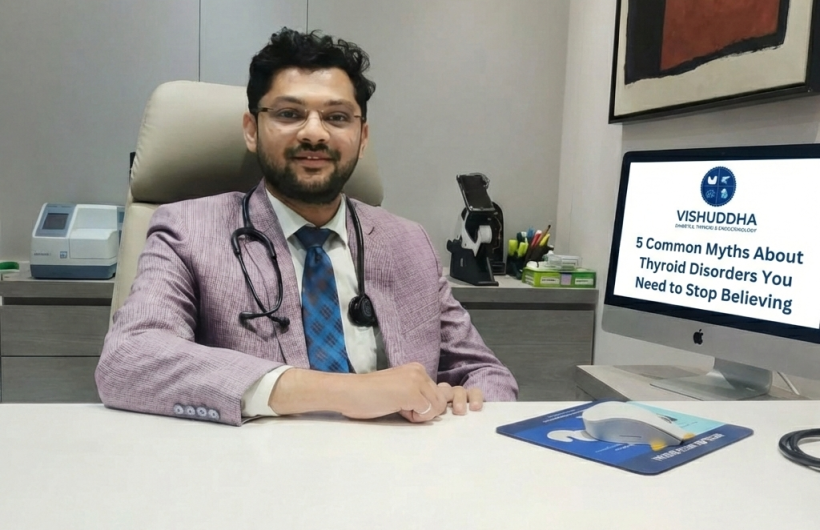
At Vishuddha Diabetes, Thyroid & Endocrine Clinic, Ahmedabad, Dr. Moxit Shah (DM Endocrinology) specializes in diagnosing and treating all types of thyroid disorders using evidence-based, personalized care.
What Does the Thyroid Gland Do?
The thyroid produces two important hormones:
- T4 (Thyroxine)
- T3 (Triiodothyronine)
These hormones regulate:
- Metabolism
- Weight
- Heart function
- Digestion
- Brain development
- Menstrual cycles
- Fertility
- Body temperature
- Cholesterol levels
Their production is controlled by TSH (Thyroid Stimulating Hormone), which is secreted by the pituitary gland.
Common Thyroid Disorders
1. Hypothyroidism (Underactive Thyroid)
This occurs when the thyroid does not produce enough hormones.
Common Causes
- Hashimoto’s thyroiditis
- Thyroid surgery
- Radioactive iodine therapy
- Certain medications
- Iodine deficiency (rare in urban India)
- Pituitary disease
Symptoms
- Weight gain
- Extreme tiredness
- Constipation
- Dry skin
- Hair fall
- Puffy face
- Feeling cold
- Slow heartbeat
- Depression
- Memory problems
- Heavy menstrual periods
- Infertility
2. Hyperthyroidism (Overactive Thyroid)
The thyroid produces excessive hormones.
Common Causes
- Graves’ disease
- Toxic multinodular goiter
- Toxic thyroid nodule
- Thyroiditis
Symptoms
- Weight loss despite normal eating
- Fast heartbeat
- Tremors
- Excessive sweating
- Anxiety
- Irritability
- Heat intolerance
- Loose stools
- Muscle weakness
- Sleep disturbances
Some patients may also develop bulging eyes (Graves’ eye disease).
3. Thyroid Nodules
Thyroid nodules are extremely common.
Most are benign.
Evaluation may include:
- Thyroid ultrasound
- Thyroid function tests
- Fine Needle Aspiration Cytology (FNAC) when indicated
4. Goiter
A goiter simply means enlargement of the thyroid gland.
Causes include:
- Iodine deficiency
- Autoimmune thyroid disease
- Nodules
- Thyroid cancer (rare)
5. Thyroid Cancer
Most thyroid cancers are highly treatable when detected early.
Warning signs include:
- Persistent neck swelling
- Rapidly growing thyroid lump
- Hoarseness
- Difficulty swallowing
- Enlarged neck lymph nodes
When Should You See an Endocrinologist?
Consult an endocrinologist if you experience:
- Persistent fatigue
- Unexplained weight gain or weight loss
- Hair loss
- Swelling in the neck
- Irregular menstrual cycles
- Difficulty conceiving
- Palpitations
- Anxiety with sweating
- Tremors
- Abnormal thyroid blood tests
- Family history of thyroid disease
How Are Thyroid Disorders Diagnosed?
Diagnosis usually includes:
Blood Tests
- TSH
- Free T4
- Free T3 (when indicated)
- Anti-TPO antibodies
- Thyroglobulin antibodies (selected cases)
- TSH receptor antibodies (Graves’ disease)
Imaging
- Thyroid Ultrasound
Additional Tests
- FNAC
- Radioactive iodine uptake scan (selected patients)
Treatment of Hypothyroidism
The standard treatment is Levothyroxine, which replaces the missing thyroid hormone.
Important Tips
Take it:
- Early morning
- On an empty stomach
- With plain water
- Wait 30–60 minutes before breakfast
- Avoid calcium and iron tablets for at least 4 hours after taking it
Most patients require periodic blood tests to adjust the dose.
Treatment of Hyperthyroidism
Depending on the cause, treatment may include:
- Antithyroid medications (e.g., methimazole/carbimazole)
- Beta-blockers for symptom relief
- Radioactive iodine therapy
- Thyroid surgery in selected cases
The treatment plan depends on age, severity, pregnancy status, and the underlying cause.
Can Thyroid Disease Affect Pregnancy?
Yes.
Untreated thyroid disorders may increase the risk of:
- Miscarriage
- High blood pressure during pregnancy
- Premature delivery
- Poor fetal brain development
- Infertility
Women planning pregnancy should have thyroid function optimized before conception.
Can Thyroid Disease Cause Weight Gain?
Yes, but usually only modest weight gain.
Many people attribute significant obesity to thyroid disease, but in most cases other factors such as diet, physical inactivity, genetics, medications, or obesity itself play a much larger role.
Proper thyroid treatment restores normal metabolism but is not a weight-loss medication.
Can Thyroid Problems Cause Hair Loss?
Yes.
Both hypothyroidism and hyperthyroidism can contribute to diffuse hair loss. Hair typically begins to improve after thyroid hormone levels return to normal, although full recovery may take several months.
Lifestyle Tips for Better Thyroid Health
- Take thyroid medication correctly every day.
- Do not stop medication without consulting your doctor.
- Eat a balanced diet with adequate iodine (avoid excessive iodine supplements unless advised).
- Exercise regularly.
- Get adequate sleep.
- Avoid smoking.
- Keep follow-up appointments and repeat thyroid function tests as recommended.
Myths About Thyroid Disease
Myth: Thyroid medicine is addictive.
Fact: Levothyroxine replaces a hormone your body needs. It is not addictive.
Myth: Once started, thyroid medicine can never be stopped.
Fact: Some conditions require lifelong treatment, while others (such as some forms of thyroiditis) may recover and allow medication to be reduced or stopped under medical supervision.
Myth: Everyone with thyroid disease becomes obese.
Fact: Thyroid disease may cause modest weight changes, but severe obesity usually has multiple contributing factors.
Myth: Herbal medicines can cure thyroid disorders.
Fact: There is no high-quality scientific evidence that herbal remedies can reliably cure hypothyroidism or hyperthyroidism.
Why Choose Dr. Moxit Shah?
Dr. Moxit Shah is a DM Endocrinologist specializing in:
- Thyroid disorders
- Diabetes
- Obesity and weight management
- PCOS
- Pituitary disorders
- Adrenal disorders
- Osteoporosis and metabolic bone disease
At Vishuddha Diabetes, Thyroid & Endocrine Clinic, Ahmedabad, every patient receives a comprehensive evaluation, accurate diagnosis, individualized treatment, and long-term follow-up based on current clinical guidelines.
Frequently Asked Questions (FAQs)
Can thyroid disease be cured?
Some thyroid disorders are temporary, while others require long-term treatment. The outlook depends on the underlying condition.
Is thyroid disease hereditary?
Yes. Autoimmune thyroid diseases such as Hashimoto’s thyroiditis and Graves’ disease often run in families.
How often should thyroid tests be repeated?
Typically 6–8 weeks after a dose adjustment, then every 6–12 months once levels are stable, although your endocrinologist may recommend a different schedule.
Can thyroid patients exercise?
Yes. Regular physical activity is encouraged once thyroid hormone levels are adequately controlled.
Should I avoid certain foods?
Most people do not need major dietary restrictions. If you take levothyroxine, avoid taking it together with calcium, iron, or soy supplements, as they can reduce absorption.
Book a Consultation with Dr. Moxit Shah
If you have symptoms of a thyroid disorder or have been diagnosed with hypothyroidism, hyperthyroidism, thyroid nodules, or goiter, consult an endocrinologist for expert evaluation and treatment.
Dr. Moxit Shah, DM Endocrinology
Vishuddha Diabetes, Thyroid,Weight loss & Endocrine Clinic
Ahmedabad, Gujarat