
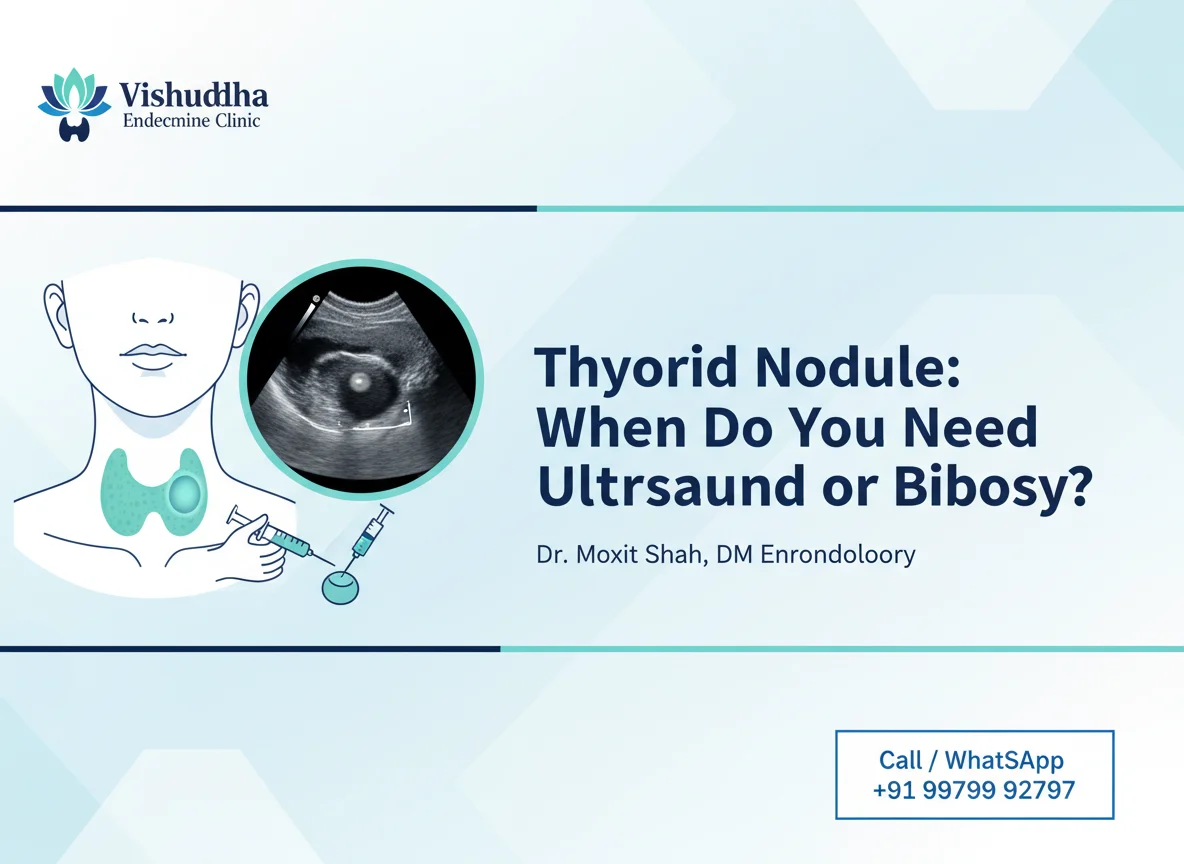
Finding a lump or swelling in the thyroid can be worrying, especially when people immediately think about thyroid cancer. The good news is that most thyroid nodules are benign (non-cancerous). However, a thyroid nodule should be assessed appropriately to determine whether it needs observation, ultrasound follow-up, or further testing.
What is a thyroid nodule?
The thyroid is a butterfly-shaped gland located in the lower front part of the neck. A thyroid nodule is an abnormal growth of thyroid cells that forms a lump within the gland. Thyroid nodules are common, and most are not cancerous.
What symptoms can a thyroid nodule cause?
Many thyroid nodules cause no symptoms at all. A person may discover a nodule because of a visible swelling in the neck, a lump noticed while looking in the mirror, or an incidental finding on an ultrasound or other imaging test.
Larger nodules can occasionally cause difficulty swallowing, a sensation of pressure in the neck, difficulty breathing, throat discomfort, or rarely hoarseness. The presence or absence of symptoms does not by itself determine whether a nodule is benign or malignant.
Does a thyroid nodule mean thyroid cancer?
No. Most thyroid nodules are benign. However, a small proportion can represent thyroid cancer, which is why appropriate evaluation is important.
A normal thyroid blood test also does not completely rule out cancer in a thyroid nodule. Many thyroid nodules, including some cancerous nodules, occur in people whose TSH is normal.
What tests are done for a thyroid nodule?
1. TSH and thyroid blood tests
Your doctor may initially check TSH, Free T4 and sometimes T3 or thyroid antibodies when clinically appropriate. TSH helps determine whether the thyroid is functioning normally. If TSH is low, additional evaluation may be needed to determine whether the nodule is producing excess thyroid hormone.
2. Thyroid ultrasound
Ultrasound is one of the most important tests for evaluating a thyroid nodule. It can assess nodule size, composition, shape, margins, echogenicity, calcifications, relationship to surrounding structures and the presence of suspicious cervical lymph nodes.
Ultrasound findings help doctors determine whether a nodule can be monitored or whether further evaluation is appropriate.
When is a thyroid biopsy needed?
Not every thyroid nodule requires a biopsy. The decision depends on factors such as nodule size, ultrasound appearance, suspicious features, growth over time, patient-specific risk factors and the presence of suspicious lymph nodes.
When indicated, a fine-needle aspiration (FNA/FNAC) may be performed. During FNA, a thin needle is used to obtain cells from the nodule. These cells are examined by a pathologist to determine whether the nodule is benign, malignant, or requires further assessment.
Does every thyroid nodule need surgery?
No. A benign thyroid nodule generally does not require surgery simply because it exists. Depending on its characteristics, your endocrinologist may recommend observation, repeat ultrasound after an appropriate interval, FNA/FNAC, further thyroid testing, or surgery in selected situations.
Surgery may be considered when there is confirmed or strongly suspected malignancy, significant compression symptoms, or other specific clinical indications.
What if the thyroid nodule is growing?
Growth does not automatically mean cancer. However, an increase in size may prompt your doctor to reassess the nodule and review its ultrasound characteristics. The decision should be based on the pattern of growth and ultrasound findings, rather than size alone.
Can thyroid nodules affect thyroid function?
Sometimes. Most thyroid nodules do not produce excess thyroid hormone. However, some nodules can become autonomously functioning and contribute to hyperthyroidism.
If TSH is suppressed, your endocrinologist may recommend additional testing to determine whether the nodule is functioning. Thyroid scans can sometimes help identify nodules that produce thyroid hormone.
What should you do if you feel a lump in your neck?
Don’t panic, but don’t ignore it either. A new thyroid swelling should be evaluated by a doctor, particularly if it is new or enlarging, associated with difficulty swallowing or breathing, associated with persistent hoarseness, associated with enlarged neck lymph nodes, or associated with a history of neck radiation or other relevant risk factors.
An appropriate clinical examination followed by thyroid testing and ultrasound can help determine the next step.
Frequently Asked Questions
Is every thyroid nodule cancerous?
No. The large majority of thyroid nodules are benign.
Can a thyroid nodule have normal TSH?
Yes. Many thyroid nodules occur in people with normal thyroid function tests.
Is thyroid FNAC painful?
FNA is generally a minimally invasive procedure performed using a fine needle. Local practice varies regarding anesthesia and technique.
Does every thyroid nodule need FNAC?
No. Ultrasound characteristics and size help determine whether FNA is appropriate.
Bottom Line
A thyroid lump does not automatically mean thyroid cancer. Most thyroid nodules are benign, but appropriate assessment is important.
The usual evaluation combines clinical examination, thyroid function testing and thyroid ultrasound, with FNA/FNAC reserved for nodules that meet appropriate criteria.
If you have a thyroid nodule or an abnormal thyroid ultrasound, an endocrinologist can help interpret the findings and decide whether monitoring, biopsy or additional testing is appropriate.
Dr. Moxit Shah, DM Endocrinology
Vishuddha Endocrine Clinic, Ahmedabad
This article is for general educational purposes and does not replace individualized medical advice.