
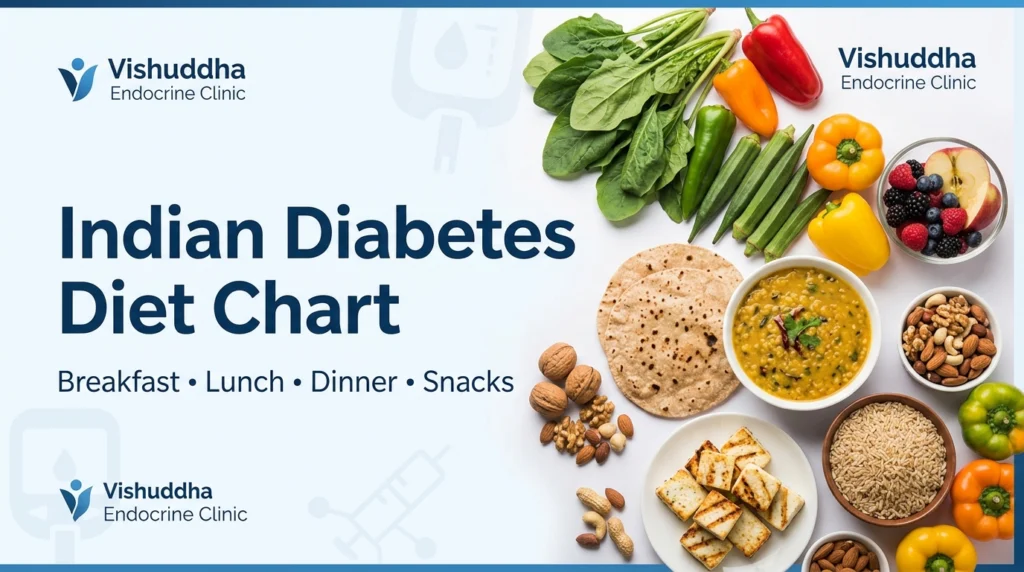
Managing diabetes does not mean giving up Indian food. The key is choosing appropriate portions, balancing carbohydrates with protein and vegetables, and making meals fit your medicines, activity level and glucose targets. This practical Indian diabetes diet chart can help you plan everyday meals.
What Should a Diabetes-Friendly Indian Diet Look Like?
A diabetes-friendly meal usually contains plenty of non-starchy vegetables, an appropriate portion of high-fibre carbohydrate foods, and a protein source. There is no single diet that works for everyone with diabetes, so meal timing and carbohydrate intake should be individualized, especially for people using insulin or medicines that can cause hypoglycaemia.
Diabetes Diet Chart: Breakfast
- Vegetable besan chilla with curd or paneer.
- Moong-dal chilla with vegetables.
- Vegetable oats or dalia with eggs, paneer or curd.
- Eggs with vegetable salad and one small whole-grain roti.
- Idli with sambar in a controlled portion.
Lunch: A Simple Indian Plate Method
A practical approach is to make about half the plate non-starchy vegetables, one quarter protein and one quarter carbohydrate-containing foods. The exact portion should be individualized.
- Vegetables: sabzi, salad and leafy vegetables.
- Protein: dal, chana, rajma, paneer, tofu, eggs, fish or lean chicken.
- Carbohydrate: a measured portion of roti, brown rice, hand-pounded rice or millets.
Can People With Diabetes Eat Roti?
Yes. Diabetes does not automatically mean avoiding roti. The important factors are the type and quantity of carbohydrate, the rest of the meal and your individual glucose response.
Healthy Snacks for Diabetes
- A small portion of unsalted nuts.
- Roasted chana.
- Unsweetened curd.
- One small whole fruit, according to your individual meal plan.
- Boiled egg.
For more ideas, read 7 Diabetes-Friendly Snacks and Which Fruits Are Best for Diabetes?.
Are Fruits Allowed in Diabetes?
Most people with diabetes can include whole fruit in a balanced diet. Whole fruit is generally preferable to fruit juice because it provides fibre. Portion size still matters.
Foods to Limit
- Sugar-sweetened beverages and packaged juices.
- Sweets and desserts.
- Large portions of white rice or refined flour foods.
- Frequent fried snacks.
- Highly processed packaged foods.
Sample One-Day Indian Diabetes Meal Plan
Breakfast: Vegetable besan chilla with curd.
Lunch: Vegetable sabzi + dal/paneer + measured portion of roti or rice + salad.
Evening: Roasted chana or a small portion of nuts.
Dinner: Non-starchy vegetables + protein + a controlled portion of carbohydrate.
What About Diabetes Medicines and Diet?
If you use insulin or medicines that can cause low blood glucose, suddenly skipping meals or substantially reducing carbohydrate intake may increase the risk of hypoglycaemia. Do not change diabetes medicines on your own.
You can also read How to Control Blood Sugar: Diabetes Management Tips.
When Should You See an Endocrinologist?
Consider specialist review if your sugars remain above target, you experience repeated hypoglycaemia, you are starting or adjusting insulin, you have diabetes complications, or you need an individualized diabetes management plan.
Bottom Line
A diabetes-friendly Indian diet can include roti, rice, dal, vegetables, curd, eggs, paneer, fish, chicken and whole fruits. Focus on portion control, fibre, adequate protein and minimally processed foods.
Dr. Moxit Shah, DM Endocrinology, provides diabetes, thyroid and medical weight-loss care at Vishuddha Endocrine Clinic in Ahmedabad.