
By Dr. Moxit Shah, DM Endocrinologist in Ahmedabad
If your blood sugar is higher than normal but not yet in the diabetes range, you may have prediabetes.
Prediabetes is an important warning sign. It means your risk of developing type 2 diabetes is higher, but it also provides an opportunity to intervene early.
Many people now ask:
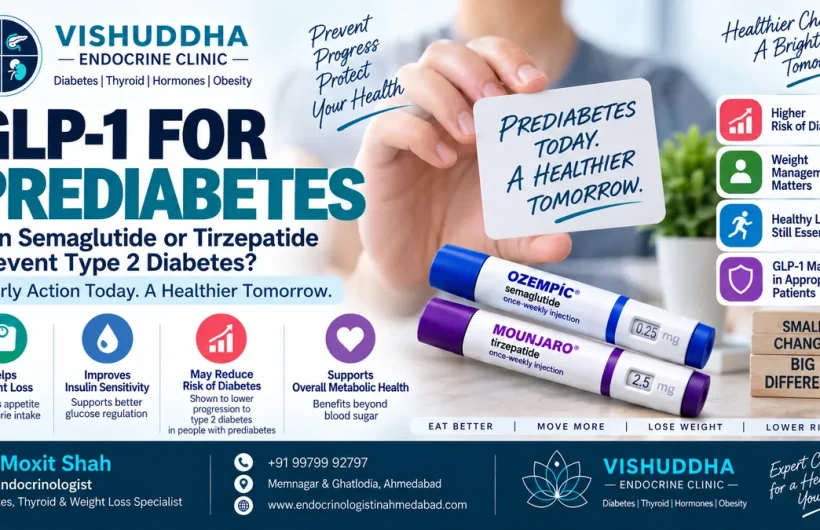
“Can GLP-1 medicines such as semaglutide or tirzepatide prevent diabetes if I have prediabetes?”
The answer requires some nuance.
GLP-1-based medicines can produce substantial weight loss and have been shown to reduce progression to diabetes in certain populations with prediabetes. However, they are not currently recommended simply as a medication to prevent diabetes in every person with prediabetes.
The strongest evidence and current guidelines emphasize weight management, healthy eating, physical activity and prevention of excess weight gain. GLP-1-based medicines may be appropriate when a person with prediabetes also has overweight or obesity and meets appropriate criteria for obesity treatment.
What Is Prediabetes?
Prediabetes means that blood glucose is higher than normal but has not reached the diagnostic range for type 2 diabetes.
According to the American Diabetes Association, prediabetes includes:
- HbA1c: 5.7–6.4%
- Fasting plasma glucose: 100–125 mg/dL
- 2-hour glucose during a 75-g oral glucose tolerance test: 140–199 mg/dL
Prediabetes is associated with an increased risk of developing type 2 diabetes and cardiovascular disease.
Importantly, prediabetes does not mean that diabetes is inevitable.
Early intervention can significantly reduce the risk of progression.
Why Does Prediabetes Develop?
Prediabetes often develops as insulin resistance increases.
Several factors can contribute, including:
- Excess body weight
- Abdominal obesity
- Physical inactivity
- Family history of diabetes
- Increasing age
- Previous gestational diabetes
- Polycystic ovary syndrome (PCOS)
- High blood pressure
- Abnormal cholesterol or triglycerides
- Unhealthy eating patterns
For many people, excess weight and insulin resistance are closely connected.
This is why weight management is one of the most important strategies for preventing type 2 diabetes.
Can Prediabetes Be Reversed?
Yes, in many people.
Prediabetes can improve when the underlying metabolic factors improve.
Lifestyle changes can result in:
- Lower fasting glucose
- Lower HbA1c
- Improved insulin sensitivity
- Weight loss
- Lower risk of developing type 2 diabetes
The ADA 2026 Standards recommend that adults with overweight or obesity who are at high risk of diabetes aim for at least 5–7% weight loss, together with a healthy eating pattern and at least 150 minutes of moderate-intensity physical activity per week.
Greater weight loss can provide additional metabolic benefits.
Where Do GLP-1 Medicines Fit In?
GLP-1 medicines mimic the effects of the natural hormone GLP-1.
They can:
- Reduce appetite
- Increase fullness
- Slow gastric emptying
- Improve glucose regulation
- Reduce food intake
- Promote weight loss
WHO describes GLP-1 therapies as medicines that can help regulate blood glucose and appetite and support weight loss. WHO recommends their use for appropriate adults with obesity as part of comprehensive long-term care that includes healthy diet, physical activity and professional support.
This is particularly relevant to prediabetes because weight loss itself can reduce the risk of progressing to type 2 diabetes.
Can Semaglutide Prevent Type 2 Diabetes?
Semaglutide can reduce the risk of progression to diabetes in people with prediabetes in certain study populations.
The ADA 2026 Standards note that several obesity medicines, including semaglutide, have been shown to decrease the incidence of diabetes in people with prediabetes.
However, there is an important distinction:
Semaglutide is not prescribed solely because someone has a mildly elevated HbA1c.
It may be considered when the person also has an appropriate indication for obesity treatment, such as overweight or obesity with relevant health risks.
The decision should be individualized.
What About Tirzepatide?
Tirzepatide activates both GIP and GLP-1 pathways.
It can produce substantial weight loss and improve glucose metabolism.
Studies have shown that tirzepatide can reduce progression from prediabetes toward type 2 diabetes in people with obesity, and the ADA 2026 Standards recognize GLP-1-based obesity treatment as an important option for people at high risk of diabetes.
However, the current evidence does not mean that everyone with prediabetes should start tirzepatide.
Treatment should be based on the person’s:
- BMI
- Weight-related health problems
- Diabetes risk
- Cardiovascular risk
- Medical history
- Treatment goals
- Ability to sustain lifestyle changes
Should Everyone With Prediabetes Take a GLP-1 Medicine?
No.
This is one of the most important points.
If someone has:
- Mildly elevated blood glucose
- Normal body weight
- No significant obesity-related complications
- No appropriate indication for obesity pharmacotherapy
then a GLP-1 medicine may not be necessary.
For many people, the first-line approach is:
Healthy diet + physical activity + weight management + regular monitoring
The ADA states that there are currently no long-term data supporting pharmacologic treatment other than metformin solely for the purpose of preventing type 2 diabetes. At the same time, GLP-1-based therapies can be highly beneficial when used appropriately for weight management in people with overweight or obesity.
What Is the Role of Metformin in Prediabetes?
Metformin has a well-established role in diabetes prevention for selected high-risk individuals.
The ADA 2026 Standards recommend considering metformin particularly in people at higher risk, such as some adults aged 25–59 years with:
- BMI ≥35 kg/m²
- Higher fasting glucose
- HbA1c ≥6.0%
- Previous gestational diabetes
The decision should still be individualized.
Therefore, metformin and GLP-1-based obesity treatment should not be considered interchangeable.
They have different indications and roles.
GLP-1 vs Metformin for Prediabetes
| Feature | Metformin | GLP-1-based obesity treatment |
|---|---|---|
| Role in diabetes prevention | Established for selected high-risk people | Not routinely used solely for prevention |
| Weight loss | Usually modest | Often substantially greater |
| Appetite reduction | Limited | Significant in many patients |
| Best suited for | Selected high-risk prediabetes | Appropriate overweight/obesity treatment |
| Requires lifestyle changes | Yes | Yes |
| Long-term treatment | May be appropriate | Often requires ongoing treatment |
The best choice depends on the patient’s overall risk profile.
Can Weight Loss Prevent Diabetes?
Absolutely.
Weight loss is one of the most powerful modifiable factors for reducing diabetes risk in people with overweight or obesity.
The ADA notes that obesity management can delay progression from prediabetes to type 2 diabetes.
Even relatively modest weight loss can improve insulin sensitivity.
Greater weight loss may provide greater benefits.
This is why treating obesity early can be an important part of diabetes prevention.
How Much Weight Should You Lose If You Have Prediabetes?
There is no single target that applies to everyone.
For adults with overweight or obesity at high risk of diabetes, the ADA recommends aiming for at least 5–7% reduction in initial body weight through lifestyle intervention.
For someone weighing 100 kg, for example:
5% = 5 kg
7% = 7 kg
For some people, a greater weight reduction may provide additional benefits.
The target should be realistic, medically appropriate and sustainable.
What If I Have Obesity and Prediabetes?
This is a different situation from having prediabetes alone.
If you have:
Prediabetes + overweight/obesity
then weight management becomes a major component of diabetes prevention.
Depending on your BMI and associated health conditions, your doctor may consider:
- Lifestyle intervention
- Structured weight-management programs
- Metformin in selected high-risk patients
- Anti-obesity medication
- GLP-1-based therapy
- Tirzepatide
- Metabolic surgery for selected patients with severe obesity
WHO recommends GLP-1 therapies as an option for long-term treatment of obesity in appropriate adults, alongside healthy diet, physical activity and professional support.
Can GLP-1 Medicines Help With Insulin Resistance?
They can help improve metabolic health, particularly when they result in meaningful weight loss.
Weight reduction can improve:
- Insulin sensitivity
- Blood glucose
- Triglycerides
- Blood pressure
- Liver fat
- Metabolic risk
However, “insulin resistance” is not itself a reason for everyone to take a GLP-1 medicine.
The overall clinical picture matters.
Can GLP-1 Medicines Prevent Diabetes Even If I Don’t Lose Weight?
Weight loss is a major pathway through which GLP-1-based obesity treatment reduces diabetes risk.
There may also be direct metabolic effects, but for practical clinical care, weight management remains a central part of diabetes prevention.
Therefore, the goal should not be simply to take an injection.
The goal is to achieve and maintain healthier body weight and metabolic health.
What Should You Eat If You Have Prediabetes?
A sustainable eating pattern is more important than a short-term “diabetes diet.”
Focus on:
Protein
Include appropriate sources of protein such as:
- Dal
- Beans
- Pulses
- Paneer
- Curd
- Eggs
- Fish or lean meat, if preferred
Vegetables
Aim for plenty of non-starchy vegetables.
High-fiber foods
Include:
- Whole grains
- Pulses
- Vegetables
- Fruits in appropriate portions
- Nuts and seeds
Reduce
Try to limit:
- Sugary drinks
- Sweets
- Refined carbohydrates
- Highly processed foods
- Frequent high-calorie snacks
- Excess portions
The best diet is one that you can follow consistently.
What Exercise Is Best for Prediabetes?
A combination of aerobic activity and resistance training is ideal for many people.
Examples include:
Aerobic activity
- Brisk walking
- Cycling
- Swimming
- Jogging
Resistance training
- Weight training
- Resistance bands
- Body-weight exercises
The ADA recommends at least 150 minutes per week of moderate-intensity physical activity for diabetes prevention, when medically appropriate.
Can GLP-1 Medicines Replace Exercise?
No.
GLP-1 medicines are not a replacement for physical activity.
Exercise helps:
- Improve insulin sensitivity
- Maintain muscle
- Improve cardiovascular fitness
- Support weight maintenance
- Improve overall health
For people taking GLP-1 medicines, resistance exercise is particularly useful for supporting muscle preservation during weight loss.
What Happens If I Stop a GLP-1 Medicine?
This is an important consideration before starting treatment.
Obesity is generally a chronic condition.
When effective weight-management medication is stopped, appetite and weight may increase again in some people.
The ADA 2026 Standards note that discontinuing chronic obesity pharmacotherapy often results in weight regain and recurrence of cardiometabolic risk factors.
Therefore, GLP-1 treatment should be considered as part of a long-term weight-management strategy, rather than a short course of injections.
Are GLP-1 Medicines Safe for Everyone?
No.
They are prescription medicines and should be used after appropriate medical evaluation.
Your doctor may need to consider:
- Previous pancreatitis
- Gallbladder disease
- Severe gastrointestinal disease
- Severe gastroparesis
- Kidney function
- Other medications
- Pregnancy plans
- Personal or family history of medullary thyroid carcinoma or MEN2, depending on the medicine
Pregnancy is an especially important consideration. WHO’s obesity guideline specifically excludes pregnant women from its recommendation for GLP-1 therapy for obesity.
What Are the Common Side Effects?
The most common side effects include:
- Nausea
- Vomiting
- Diarrhea
- Constipation
- Bloating
- Abdominal discomfort
- Reduced appetite
Starting at a low dose and increasing gradually can improve tolerability.
If you experience severe or persistent symptoms, contact your doctor.
Can Prediabetes Go Back to Normal?
Yes.
Many people with prediabetes can return their glucose levels to the normal range.
This may happen through:
- Weight loss
- Improved diet
- Increased physical activity
- Better sleep
- Treatment of obesity
- Appropriate medication when indicated
However, returning to normal glucose does not mean that the underlying risk has disappeared permanently.
Continued healthy lifestyle habits and periodic monitoring remain important.
How Often Should Prediabetes Be Checked?
The appropriate interval depends on your risk factors and previous results.
People with prediabetes generally need regular monitoring of:
- HbA1c
- Fasting glucose
- Weight
- Blood pressure
- Lipid profile
- Other cardiovascular risk factors
If glucose levels rise into the diabetes range, further evaluation and treatment should not be delayed.
Who Is at Highest Risk of Progressing From Prediabetes to Diabetes?
Risk is higher when there is:
- Higher HbA1c
- Higher fasting glucose
- Obesity
- Abdominal obesity
- Strong family history
- Previous gestational diabetes
- PCOS
- Physical inactivity
- Hypertension
- Abnormal cholesterol
- Increasing age
The ADA recommends more intensive preventive approaches for people at particularly high risk, including those with BMI ≥35 kg/m², higher glucose levels or a history of gestational diabetes.
Frequently Asked Questions
Is semaglutide approved specifically for prediabetes?
Semaglutide is not simply prescribed because a person has prediabetes. It may be considered when the person has an appropriate indication for obesity treatment or another approved indication.
Can Mounjaro prevent diabetes?
Tirzepatide has demonstrated strong effects on weight and glucose metabolism and has reduced progression to diabetes in certain populations studied. However, it should not be prescribed automatically to everyone with prediabetes.
Can Ozempic reverse prediabetes?
Semaglutide can improve blood glucose and promote weight loss, but “reversing prediabetes” should not be presented as a guaranteed effect of Ozempic. Lifestyle and appropriate weight management remain central.
Is metformin better than GLP-1 for prediabetes?
There is no single answer. Metformin has an established diabetes-prevention role in selected high-risk people. GLP-1-based medicines are primarily considered for appropriate obesity treatment rather than simply for mildly elevated glucose.
If I lose weight, can my prediabetes disappear?
Yes. Significant and sustained weight loss can improve insulin sensitivity and glucose levels, and some people return to normal glucose levels.
Should I take a GLP-1 injection just because my HbA1c is 6.0%?
Not necessarily. HbA1c is only one part of the decision. Your BMI, weight-related conditions, diabetes risk, medical history and treatment goals should all be considered.
Final Takeaway
Prediabetes is an opportunity to act early—not a diagnosis that automatically means you will develop diabetes.
For many people, the most important treatment is:
Healthy nutrition + regular physical activity + weight management + regular monitoring
If overweight or obesity is present, effective weight management can substantially reduce the risk of progressing to type 2 diabetes.
GLP-1-based medicines such as semaglutide and tirzepatide can be powerful tools for weight management in appropriately selected patients. However, they should not be viewed as routine medicines for everyone with prediabetes.
The right treatment depends on your overall metabolic risk, weight, medical history and long-term goals.
Early intervention can make a meaningful difference.
Consult Dr. Moxit Shah – DM Endocrinologist in Ahmedabad
Dr. Moxit Shah, DM Endocrinologist
Vishuddha Endocrine Clinic
Diabetes • Thyroid • Hormones • Obesity
Ahmedabad
📞 +91 99799 92797
If you have prediabetes, obesity, insulin resistance, PCOS or a strong family history of diabetes, an endocrinology consultation can help assess your risk and develop an individualized diabetes-prevention and weight-management plan.
Vishuddha Endocrine Clinic
Visit the official clinic website