
What Is a Normal Blood Sugar Level?
Blood sugar, also called blood glucose, is one of the most important measurements used to assess diabetes and prediabetes.
Many people ask:
- What should fasting blood sugar be?
- What is a normal sugar level after eating?
- Is 110 fasting sugar normal?
- Is 140 after eating normal?
- What HbA1c level is considered normal?
- At what sugar level does diabetes begin?
The answer depends on when the blood sugar is measured, whether the person has diabetes, and which test is being used.
For adults without diabetes, the American Diabetes Association (ADA) defines normal glucose ranges differently from treatment targets used for people who already have diabetes.
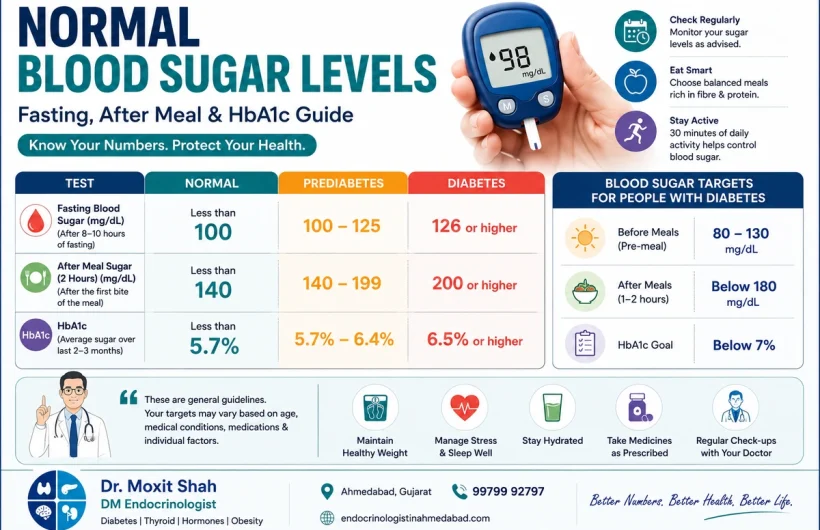
Blood Sugar Levels Chart
| Test | Normal | Prediabetes | Diabetes |
|---|---|---|---|
| Fasting blood glucose | <100 mg/dL | 100–125 mg/dL | ≥126 mg/dL |
| 2-hour OGTT | <140 mg/dL | 140–199 mg/dL | ≥200 mg/dL |
| HbA1c | <5.7% | 5.7–6.4% | ≥6.5% |
| Random glucose | — | — | ≥200 mg/dL with classic symptoms |
These are diagnostic thresholds for nonpregnant adults. A diabetes diagnosis generally requires confirmation when there is no unequivocal hyperglycemia.
1. What Is a Normal Fasting Blood Sugar Level?
A fasting blood glucose test is usually performed after at least 8 hours without caloric intake.
For adults without diabetes:
Normal fasting sugar
Less than 100 mg/dL
Prediabetes
100–125 mg/dL
Diabetes
126 mg/dL or higher
A single high fasting glucose does not always mean that a person has diabetes. If there are no obvious symptoms of severe hyperglycemia, the result generally needs confirmation with repeat testing or another diagnostic test.
Is fasting sugar of 100–125 mg/dL normal?
No. According to ADA criteria, fasting glucose between 100 and 125 mg/dL falls in the prediabetes range.
For example:
- 85 mg/dL → normal
- 95 mg/dL → normal
- 105 mg/dL → prediabetes range
- 115 mg/dL → prediabetes range
- 125 mg/dL → prediabetes range
- 126 mg/dL or higher → diabetes range if confirmed
However, the overall clinical picture matters. Your doctor may consider HbA1c, repeat fasting glucose, medications, weight, family history and other risk factors.
2. What Is a Normal Blood Sugar After Eating?
People often use the term “post-meal sugar” or “PP sugar.”
It is important to know that the timing of the measurement matters.
A 2-hour glucose value during a 75-g oral glucose tolerance test (OGTT) has specific diagnostic thresholds:
- Below 140 mg/dL: normal
- 140–199 mg/dL: prediabetes
- 200 mg/dL or higher: diabetes range
These values apply to the standardized OGTT, not necessarily to an ordinary home glucometer reading after a regular meal.
For people who already have diabetes, the ADA generally recommends a treatment goal of:
Peak post-meal glucose <180 mg/dL for many nonpregnant adults, with post-meal measurements generally assessed 1–2 hours after the beginning of the meal.
This distinction is important:
A diagnostic test and a treatment target are not the same thing.
3. What Is a Normal HbA1c Level?
HbA1c provides an estimate of average blood glucose over approximately the previous 2–3 months.
The ADA categories are:
Normal HbA1c
Below 5.7%
Prediabetes
5.7–6.4%
Diabetes
6.5% or higher
HbA1c is useful because it does not require fasting and provides information about longer-term glucose exposure.
For example:
- HbA1c 5.2% → normal
- HbA1c 5.6% → normal
- HbA1c 5.8% → prediabetes range
- HbA1c 6.2% → prediabetes range
- HbA1c 6.5% → diabetes range
- HbA1c 7.5% → diabetes, above the usual treatment goal for many adults
4. What Is the Normal Blood Sugar Target for Someone With Diabetes?
This is an important distinction.
A person who already has diabetes does not necessarily need to have every glucose reading in the same range as someone without diabetes.
For many nonpregnant adults with diabetes, ADA 2026 recommends:
- Before meals: 80–130 mg/dL
- Peak after meals: <180 mg/dL
- HbA1c: generally <7%
However, these are general treatment targets, not universal targets. Goals should be individualized according to age, duration of diabetes, comorbidities, hypoglycemia risk, life expectancy and other factors.
5. Normal Blood Sugar vs Diabetes Blood Sugar Target
This is where many patients become confused.
Person without diabetes
The diagnostic categories are:
Fasting
- <100 → normal
- 100–125 → prediabetes
- ≥126 → diabetes range
HbA1c
- <5.7% → normal
- 5.7–6.4% → prediabetes
- ≥6.5% → diabetes range
Person with diabetes
Treatment goals are different.
For many adults:
- Before meals: 80–130 mg/dL
- Peak after meals: <180 mg/dL
- HbA1c: <7%
Therefore, a glucose reading of 120 mg/dL before a meal may be considered acceptable as a treatment value in a person with diabetes, even though a fasting glucose of 120 mg/dL in a person without diagnosed diabetes falls within the prediabetes range.
6. Is Blood Sugar of 110 Normal?
It depends on when the test was performed.
If fasting:
110 mg/dL is not considered normal. It falls in the prediabetes range.
If measured after eating:
Its interpretation depends on the timing of the test, the type of meal and whether the person has diabetes.
Therefore, never interpret a glucose number without knowing:
- Was the person fasting?
- How long after eating was it measured?
- Was it a laboratory test or glucometer reading?
- Does the person already have diabetes?
- What is the HbA1c?
7. Is Blood Sugar of 140 Normal?
Again, timing matters.
A glucose value of 140 mg/dL cannot be interpreted simply as “normal” or “high” without knowing when it was measured.
For the standardized 2-hour OGTT:
140–199 mg/dL is the prediabetes range.
But a casual home glucose measurement after an ordinary meal is different from an OGTT.
This is why doctors look at the pattern of glucose readings, rather than making a diagnosis based on one isolated home reading.
8. Why Can Blood Sugar Be High in the Morning?
Some people notice that their fasting sugar is higher than expected even when they have not eaten anything overnight.
Possible reasons include:
Dawn phenomenon
Hormones such as cortisol and growth hormone rise during the early morning and can increase glucose production.
Insulin resistance
The liver may continue releasing glucose into the bloodstream, while the body’s insulin is less effective.
Diabetes progression
As type 2 diabetes progresses, pancreatic beta-cell function can decline, making glucose control more difficult.
Late-night meals or snacks
Large carbohydrate-rich meals or snacks late at night can contribute to elevated morning glucose.
Poor sleep and stress
Sleep disruption and stress can affect glucose regulation.
If fasting glucose is repeatedly elevated, it is worth discussing the pattern with an endocrinologist rather than simply skipping dinner or breakfast.
9. Why Can Blood Sugar Be High After Eating?
After a meal, carbohydrates are broken down into glucose and absorbed into the bloodstream.
The pancreas normally releases insulin, which helps glucose move into tissues and suppresses excessive glucose production by the liver.
Post-meal glucose may become high when there is:
- Insulin resistance
- Reduced insulin secretion
- Large carbohydrate portions
- Refined carbohydrates
- Excess body weight, particularly abdominal fat
- Physical inactivity
- Advanced type 2 diabetes
- Certain medications
- Poorly controlled diabetes
Repeated high post-meal glucose can contribute to an elevated HbA1c.
10. Can Blood Sugar Be Normal but HbA1c Be High?
Yes.
HbA1c reflects average glucose over a longer period, whereas a fasting or post-meal glucose measurement represents a single point in time.
For example, a person may have:
Fasting glucose: 95 mg/dL
but still have significant glucose elevations after meals, resulting in a higher HbA1c.
This is one reason why looking at only fasting glucose may not provide the complete picture.
Conversely, HbA1c and glucose measurements can sometimes be substantially discordant, in which case the reason for the discrepancy should be investigated.
11. Can You Have Diabetes With a Normal Fasting Sugar?
Yes.
Diabetes is not diagnosed using fasting glucose alone.
A person may have:
- Normal or borderline fasting glucose
- High post-meal glucose
- Elevated HbA1c
Depending on the results and clinical situation, further testing may be required.
This is particularly relevant in the early stages of glucose intolerance.
12. How Often Should You Check Your Blood Sugar?
The frequency depends on the type of diabetes and treatment.
Some people may need frequent monitoring, particularly those using insulin or medications that can cause hypoglycemia.
Others may not need to check their glucose multiple times every day.
Continuous glucose monitoring (CGM) may also be appropriate for selected patients.
For people using CGM, ADA 2026 considers more than 70% time in range an appropriate goal for many nonpregnant adults, although targets should still be individualized.
13. Is Home Glucometer Sugar Reliable?
A home glucometer can be extremely useful for diabetes monitoring, but the result can be affected by:
- Incorrect hand washing
- Food or sugar residue on fingers
- Expired or improperly stored strips
- Incorrect technique
- Poorly maintained equipment
- Certain medical conditions or circumstances
If a home glucose reading seems unexpectedly high or low, repeat the test correctly and discuss persistent discrepancies with your doctor.
It is also important to remember that a glucometer reading and a laboratory plasma glucose measurement are not exactly the same type of test.
14. When Should You See an Endocrinologist?
You should consider medical evaluation if:
- Fasting glucose is repeatedly ≥100 mg/dL
- Fasting glucose is repeatedly ≥126 mg/dL
- HbA1c is ≥5.7%
- HbA1c is ≥6.5%
- Post-meal glucose is repeatedly high
- You have excessive thirst or urination
- You have unexplained weight loss
- You have a strong family history of diabetes
- You are overweight or have abdominal obesity
- You are already taking diabetes medicines but glucose remains high
- Your fasting and HbA1c results do not seem to match
Early evaluation can help identify prediabetes or diabetes before complications develop.
Normal Blood Sugar Levels: Quick Summary
| Measurement | Normal | Prediabetes | Diabetes |
|---|---|---|---|
| Fasting glucose | <100 mg/dL | 100–125 mg/dL | ≥126 mg/dL |
| 2-hour OGTT | <140 mg/dL | 140–199 mg/dL | ≥200 mg/dL |
| HbA1c | <5.7% | 5.7–6.4% | ≥6.5% |
For many adults already diagnosed with diabetes, common treatment targets are:
Before meals: 80–130 mg/dL
Peak after meals: <180 mg/dL
HbA1c: <7%
Frequently Asked Questions
What is the normal fasting blood sugar level?
For adults without diabetes, fasting plasma glucose below 100 mg/dL is considered normal.
Is 100 fasting sugar normal?
A fasting glucose of exactly 100 mg/dL falls into the prediabetes range according to ADA criteria.
Is 110 fasting sugar dangerous?
110 mg/dL is in the prediabetes range, but it does not mean that diabetes is inevitable. Lifestyle changes and appropriate follow-up can reduce future risk.
Is 120 fasting sugar diabetes?
No. A fasting glucose of 120 mg/dL falls in the prediabetes range. Diabetes is diagnosed at fasting plasma glucose ≥126 mg/dL, with appropriate confirmation when required.
Is 140 blood sugar after eating normal?
It depends on when and how it was measured. A 2-hour value of 140–199 mg/dL during a standardized OGTT falls in the prediabetes range, but an ordinary post-meal home glucose reading should not be interpreted using the OGTT criteria alone.
What HbA1c level is normal?
An HbA1c below 5.7% is considered normal for nonpregnant adults.
What HbA1c level means diabetes?
An HbA1c of 6.5% or higher meets the laboratory diagnostic threshold for diabetes, with confirmation generally required when there is no unequivocal hyperglycemia.
What is a good sugar level for someone with diabetes?
For many nonpregnant adults with diabetes, ADA 2026 recommends a pre-meal glucose target of 80–130 mg/dL, peak post-meal glucose below 180 mg/dL, and HbA1c generally below 7%. Targets should be individualized.
Final Takeaway
There is no single “normal blood sugar number.” The correct interpretation depends on whether the test was fasting, after a meal, part of an OGTT, random glucose testing or HbA1c.
For adults without diabetes:
Fasting <100 mg/dL and HbA1c <5.7% are generally considered normal.
If your fasting sugar, post-meal sugar or HbA1c is repeatedly elevated, do not rely on a single home reading. A proper evaluation can determine whether you have normal glucose levels, prediabetes or diabetes and whether further testing is needed.
For personalized evaluation of diabetes, prediabetes, obesity and hormonal disorders, consult an endocrinologist.
Dr. Moxit Shah, DM Endocrinologist, Ahmedabad
For appointments: +91 99799 92797